
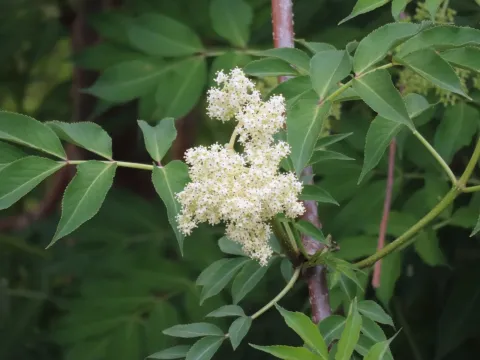
Siebold's elder
Sambucus sieboldiana
Siebold's elder (Sambucus sieboldiana) is a deciduous shrub species belonging to the Adoxaceae family. Native to East Asia, specifically Japan and the Korean Peninsula, it is commonly found in the understory of temperate forests and moist valleys.
What the section contains
Siebold's elder
Botanically, it is characterized by its compound, pinnate leaves and large, dense clusters of white flowers followed by red berries. The plant can reach significant heights, often forming a large, multi-stemmed shrub that serves as an excellent focal point in landscape design.
The cultivation requirements focus on rich, well-draining soil and a location that provides partial shade, although it can tolerate full sun in cooler regions. It is relatively hardy and benefits from a consistent moisture supply, especially during the establishment phase.
Maintenance involves pruning in late winter or early spring to remove dead wood and encourage vigorous new growth. Regular mulching around the root zone helps conserve soil moisture and suppresses weeds, which is crucial for young specimens.
The economic and horticultural uses include ornamental planting for hedges, wildlife habitat creation, and traditional ethnobotanical applications. It is valued for its rapid growth rate and aesthetic appeal across different seasons of the year.
The primary diseases affecting Sambucus sieboldiana include fungal leaf spots and powdery mildew, particularly in areas with high humidity. Proper spacing between plants to ensure adequate air circulation is the best preventive measure against these pathogens.
Insect pests such as aphids and spider mites can colonize the foliage during the summer months. Gardeners should monitor the underside of leaves for early signs of infestation and apply insecticidal soap or horticultural oil when necessary.