
Acrocomia mexicana
Acrocomia mexicana
Propagation of Acrocomia mexicana is primarily achieved through seeds. The seeds exhibit a long dormancy period, which necessitates scarification or soaking in warm water for several days to enhance germination rates.
What the section contains
Acrocomia mexicana
Sowing should take place in dedicated nurseries with well-draining substrate. Maintaining consistently high temperatures and humidity levels is critical during the initial stages to stimulate consistent sprout emergence.
Once seedlings develop their first true leaves, they are transplanted into containers for nursery development. The ideal age for planting out into the field is between 12 and 18 months, ensuring the root system is well-established.
In large-scale cultivation, planting density is meticulously planned to ensure that sunlight penetrates the canopy effectively. The spacing is adjusted based on specific management goals and site conditions.
Young palms require careful irrigation and occasional shade during the early phases of growth until they are fully adapted to the environmental conditions of the plantation site.
Acrocomia mexicana, belonging to the Arecaceae family, is a robust palm species adapted to a wide range of tropical conditions. It thrives in areas with full sun exposure and warm climates.
The plant is noted for its impressive drought tolerance, making it a viable alternative to other palms in regions with distinct dry seasons. It is, however, highly sensitive to frost and restricted to tropical latitudes.
Well-drained, fertile sandy or loamy soils are ideal for this crop. It performs poorly in waterlogged soils, which can induce root rot and significantly compromise plant vitality.
Optimal growth occurs within a temperature range of 20 to 35 degrees Celsius. While it handles heat well, adequate water availability during the peak growing season ensures higher productivity.
Implementing a structured fertilization program, focusing on nitrogen, phosphorus, and potassium, is essential for maintaining plant health and maximizing fruit production in managed stands.
The fruit is the primary economic component, prized for the oil extracted from both the mesocarp and the inner kernel. This dual-source oil potential makes it a highly efficient crop.
Yield capacity fluctuates based on the age of the plantation and the quality of agricultural management. Mature trees produce substantial clusters of fruit annually under favorable conditions.
Current breeding efforts are focused on improving fruit size, oil content, and the ease of processing. Developing varieties that are easier to harvest is a key priority for modern agronomists.
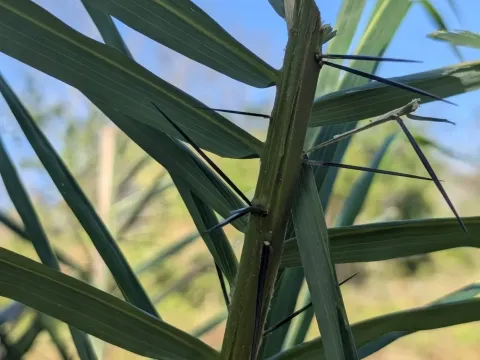
The fruits are round and grow in large, dense bunches. Harvesting requires precision and caution, as the trunk of the palm is often armed with sharp, prominent spines that protect the plant.
Beyond oil, the byproduct of the processing stage—the press cake—is highly valued as a protein-rich feed ingredient for livestock, contributing to a circular agricultural model.
Acrocomia mexicana is susceptible to various pests, most notably palm weevils, which can bore into the growth point and cause severe damage or tree death if left untreated.
Fungal diseases, including leaf spot and various crown or root rots, are more prevalent in areas with poor drainage or excessive atmospheric humidity during stagnant air conditions.
Integrated Pest Management (IPM) is highly recommended, involving regular orchard inspections and sanitation practices to remove diseased fronds and prevent pathogen spread.
Biological control agents are increasingly used to manage pest populations, reducing the dependency on synthetic chemical insecticides and protecting the local ecosystem.
Maintaining optimal spacing between trees is a fundamental cultural practice that improves air circulation, thereby naturally reducing the incidence of fungal and bacterial infections.
The harvest period is determined by the fruit color, shifting to a vibrant yellow or orange as it reaches peak maturity. Harvesting at the correct stage is vital to ensuring optimal oil quality.
Due to the sharp spines on the trunk, harvesting is labor-intensive and requires protective gear. Specialized tools such as long-reach poles or specialized ladders are often employed by workers.
Post-harvest logistics are critical; fruits should be processed promptly to minimize degradation of the oil caused by tropical heat and exposure to air.
Mechanization of harvesting remains a major challenge due to the plant's morphology, leading to a reliance on manual labor in most commercial settings.
After collection, the fruits are sorted and graded. The pulp and kernels are then processed separately to extract high-quality vegetable oils used in food, cosmetics, and biodiesel production.