
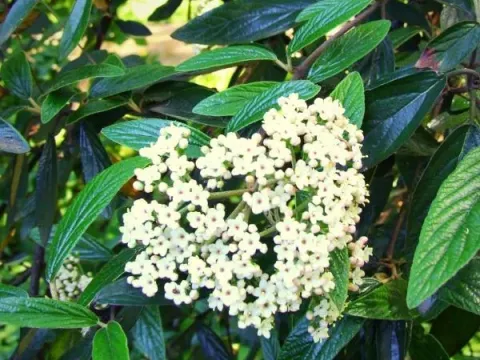
Pragense viburnum
Viburnum pragense
Viburnum pragense is an attractive, evergreen to semi-evergreen shrub belonging to the Adoxaceae family. It is a distinctive hybrid of Viburnum rhytidophyllum and Viburnum utile, which explains its unique ornamental foliage and balanced structural growth.
What the section contains
Pragense viburnum
This shrub performs best in well-drained, fertile soils with a neutral to slightly acidic pH level. It requires a location that provides ample sunlight for optimal flowering, though it shows excellent tolerance for partial shade conditions in warmer regions.
Regarding climate, Viburnum pragense prefers regions with stable, moderate temperatures. While it is hardy in many zones, young plants require protection from harsh winds and severe frost during their establishment phase in late autumn and early winter.
Agrotechnical practices involve consistent moisture management, particularly during the first few seasons. Applying organic mulch around the root zone is highly recommended to regulate soil temperature and retain essential moisture throughout the summer growing period.
In terms of хозяйственное (landscape) usage, this plant is highly prized as a specimen shrub, a foundation planting, or as a dense, year-round privacy hedge. Its leathery, dark-green leaves provide a robust backdrop for lighter-colored perennials in various garden compositions.
The primary pests affecting Pragense viburnum include aphids, which often colonize new shoot growth in the spring. If left unchecked, these insects can weaken the plant and promote the growth of sooty mold, necessitating the use of horticultural oils or insecticides.
Powdery mildew is a significant fungal threat, especially in humid and stagnant environments where air movement is restricted. Providing adequate spacing between plants is the most effective cultural method to prevent the spread of fungal spores.
Leaf spot infections are common during prolonged wet weather and can cause premature defoliation. Growers should apply copper-based fungicides if the infection pressure is high, ensuring that leaves are treated on both the upper and lower surfaces.
The most important part of pest management is the regular removal of dead or crossing branches to improve interior light and air penetration. This practice keeps the plant structure open and significantly reduces the success rate of various fungal attacks.
Overall, maintaining the health of the plant through balanced fertilization and proper irrigation is key to disease prevention. A well-nourished plant with a strong root system is significantly more resilient against both insect infestation and localized infections.