
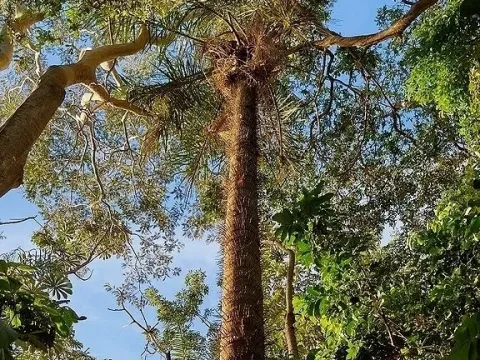
Acrocomia totai
Acrocomia totai
Acrocomia totai is a perennial tree species belonging to the Arecaceae family. It is native to the tropical and subtropical regions of South America, with significant populations found in Paraguay, Brazil, and Argentina.
What the section contains
Acrocomia totai
The plant is a single-stemmed palm that can reach heights of 10 to 15 meters. It is characterized by large, pinnate leaves, with prickly petioles being a distinctive botanical feature of this species.
To thrive, the crop requires consistently high temperatures and abundant sunlight. It is notable for its resilience to dry periods and ability to tolerate minor cold snaps, making it more adaptable than many traditional tropical oil palms.
Preferred soil conditions include well-drained substrates. While Acrocomia totai can survive in marginal soils, it exhibits optimal vegetative growth in fertile sandy or loamy soils with a neutral to slightly acidic pH level.
Agrotechnical management involves establishing widely spaced plantations, as the palm is sensitive to shading during its early growth stages. Regular weeding around the base of the trunk is essential to reduce competition for soil moisture and nutrients.
The economic value of this crop is primarily driven by the extraction of high-quality vegetable oil from the fruit pulp and seeds. Acrocomia oil is considered a promising feedstock for both the food industry and the production of biodiesel.
Yield capacity depends on the age of the plantation and the quality of maintenance. Mature palm trees are capable of producing several large fruit bunches annually, each containing hundreds of individual fruits, ensuring consistent production over several decades.
The seeds are rich in fatty acids, making them a valuable input for animal feed production. Commercial processing requires specialized machinery to effectively separate the pulp from the hard inner nut.
The economic potential is further bolstered by the species' ability to grow on degraded lands where traditional row crops struggle to produce viable yields, offering a pathway for ecosystem restoration and carbon sequestration.
Recent research indicates that improved cultivars of Acrocomia totai significantly outperform wild types in terms of oil content, paving the way for the integration of this palm into commercial fruit-bearing orchards.
The primary threats to the plantation include various fungal diseases of the root system, which are often exacerbated by waterlogging. Root decay weakens the tree, leading to a significant reduction in overall yield and vitality.
Among pests, insects that target the apical meristem or young foliage pose the greatest risk. Consistent phytosanitary monitoring is necessary to detect outbreaks early and minimize potential damage to the crown.
Weevils are another critical threat, as they can bore into the trunks of mature palms. Integrated pest management, combining biological controls and targeted insecticide applications, is required to maintain tree health.
Viral infections transmitted by sap-sucking insects can lead to severe leaf deformation and stunted growth. Sanitary pruning of infected plant parts is mandatory to prevent the spread of pathogens throughout the orchard.
Poor soil aeration coupled with high humidity provides a perfect environment for mold and mildew development. Maintaining proper planting density and ensuring good drainage are fundamental preventive measures against most pathogens.