
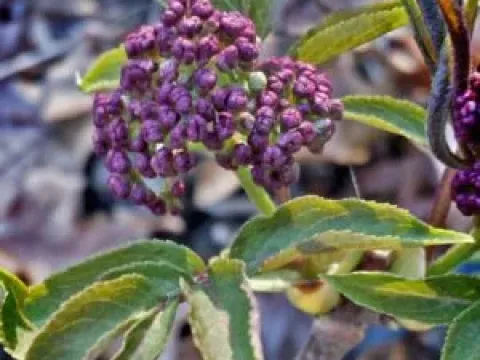
Red-berried elder
Sambucus microbotrys
The red-berried elder (Sambucus microbotrys) is a deciduous shrub belonging to the Adoxaceae family. It is natively distributed across the mountainous regions of Western North America, often inhabiting slopes and riparian zones.
What the section contains
Red-berried elder
Cultivation of this species requires well-drained, nutrient-rich soils with consistent moisture levels. The plant is particularly well-adapted to cooler environments and thrives in partial shade, mimicking the conditions of forest understories.
Regarding climate, the plant exhibits significant winter hardiness, allowing it to survive in regions with cold winters and short growing seasons. It requires adequate annual precipitation to maintain its vegetative vigor.
Agrotechnical management involves regular mulching to keep the root zone cool and moist. Due to its mountain origin, the species prefers locations where air circulation is good, preventing the build-up of excessive humidity around the foliage.
The shrub is primarily used in landscaping and ecological restoration projects, specifically for soil stabilization on embankments where its fibrous root system provides essential erosion control.
Fungal pathogens such as leaf spots and powdery mildew are the most common health issues for Sambucus microbotrys. These are typically associated with high humidity and insufficient space between plants.
Aphids represent the primary insect pest, frequently targeting the tender new growth during spring. Infestations can reduce the overall aesthetic value and vigor of the shrub if not monitored early.
Root rot, specifically caused by Phytophthora species, can occur if the plant is grown in compacted, waterlogged soil conditions, which limits oxygen availability to the roots.
Integrated pest management strategies are recommended, focusing on maintaining plant health through proper site selection and avoiding overhead irrigation that leaves water sitting on the leaves.
Periodic pruning is essential not only for shape but also for disease control, as it removes overcrowded branches that might otherwise become entry points for pests or fungal infections.