
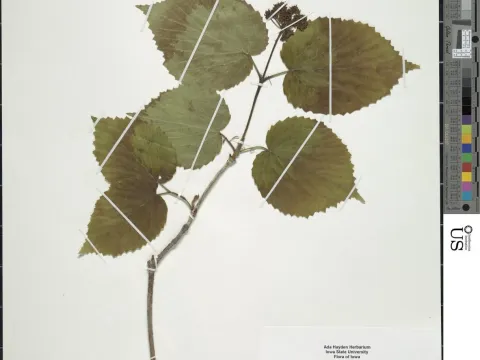
Softleaf viburnum
Viburnum molle
Softleaf viburnum (Viburnum molle) is a deciduous shrub belonging to the Adoxaceae family. It is recognized by its rounded habit and unique, exfoliating bark that becomes more pronounced as the plant matures, adding structural interest to the garden throughout the year.
What the section contains
Softleaf viburnum
The species is native to the central and eastern regions of North America. It thrives in diverse habitats, including rocky slopes and forest edges, which reflects its inherent toughness and ability to adapt to varying site conditions in cultivation.
In terms of soil requirements, Viburnum molle prefers moist, well-draining soils rich in organic matter. While it is quite versatile, loamy soils with a slightly acidic to neutral pH are considered optimal for vigorous growth.
The climate requirements are relatively modest, as the plant is known for its excellent cold hardiness. It performs well in temperate climates, tolerating both fluctuating spring temperatures and the challenges of typical winter conditions.
For best results, gardeners should provide a location that receives full sun to partial shade. While it can tolerate limited light, consistent exposure to sunlight is beneficial for maintaining a dense form and promoting a prolific display of flowers.
While generally considered a hardy plant, softleaf viburnum is not entirely immune to environmental stressors. In high humidity and poorly ventilated areas, fungal issues such as powdery mildew may develop on the foliage.
The viburnum leaf beetle is the most significant pest concern for this genus. Monitoring for eggs and larvae during the early spring is essential to prevent significant defoliation that could weaken the shrub over time.
Aphids often target new, succulent growth. While typically not fatal, they can cause leaf curling and serve as a vector for secondary problems; light horticultural soap sprays are usually effective in managing these outbreaks.
Practicing good sanitation, including the prompt removal of dead wood and debris from beneath the shrub, significantly reduces the likelihood of pest overwintering and disease persistence.
Maintaining balanced soil nutrition is vital for plant resilience. Avoid excessive nitrogen applications, which can lead to soft, succulent growth that is more attractive to sucking insects and susceptible to winter dieback.
The primary use of Viburnum molle is ornamental. It is highly valued in landscape architecture for its showy cymes of creamy white flowers that appear in spring, followed by dark blue-black fruit in the autumn.
The fruits serve an important ecological role by providing a reliable food source for migratory birds. This makes the shrub a preferred choice for wildlife-friendly gardening projects and native planting schemes.
Due to its dense branching pattern, this species is well-suited for creating privacy screens or informal hedges. It requires little pruning to maintain its natural shape, which adds to its appeal as a low-maintenance landscape plant.
- Site selection should prioritize space for its wide spread.
- Watering should be deep and infrequent to encourage root depth.
- Mulching helps conserve moisture and suppress weed competition.
Ultimately, softleaf viburnum remains a reliable choice for gardeners seeking an attractive, low-effort plant that offers seasonal interest and supports local biodiversity through its persistent fruit production.