
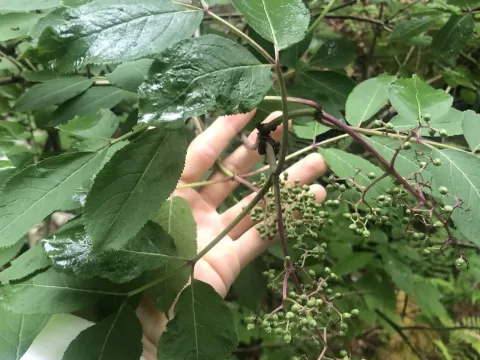
Red-fruited elderberry
Sambucus callicarpa
The red-fruited elderberry (Sambucus callicarpa) is a perennial shrub belonging to the Adoxaceae family, native to the Pacific coast of North America. It is characterized by clusters of bright red, non-edible berries that provide significant aesthetic value to the landscape.
What the section contains
Red-fruited elderberry
The plant thrives in moist, well-drained soils rich in organic matter. It is naturally adapted to forest edges and moist ravines, where it receives sufficient hydration throughout the growing season to support its vigorous annual growth.
Sunlight requirements for Sambucus callicarpa include full sun to partial shade. In warmer regions, protection from intense afternoon heat is necessary to prevent leaf scorching and excessive moisture loss from the soil.
Agrotechnical management requires consistent irrigation during dry spells. Mulching around the base of the shrub helps maintain soil temperature and moisture levels, which is crucial for healthy root system development.
Fertilization with a balanced slow-release fertilizer in early spring promotes robust vegetative growth. Minimal pruning is required, generally focusing on removing dead or crossing branches to maintain the natural shape of the shrub.
Aphids are the most common pests affecting elderberry plants. They tend to congregate on the undersides of leaves and on new growth, potentially causing curling and stunted development of the shoots.
Spider mites can also become problematic during periods of prolonged drought. Infestations are typically identified by fine webbing and yellowing of the leaves, which requires immediate treatment with miticides or water sprays.
Powdery mildew often manifests as a white, dusty coating on the leaves, usually appearing in conditions of poor air circulation and high humidity. It is best managed by thinning the canopy to improve airflow.
Fungal leaf spots can occur when the shrub is overcrowded or improperly watered. Removal of fallen, infected leaves is an essential sanitation practice to reduce the overwintering of fungal spores.
Root rot, while less common, may occur in poorly drained sites where water persists for long periods. Ensuring proper soil aeration and drainage is the most effective preventive measure against this condition.