
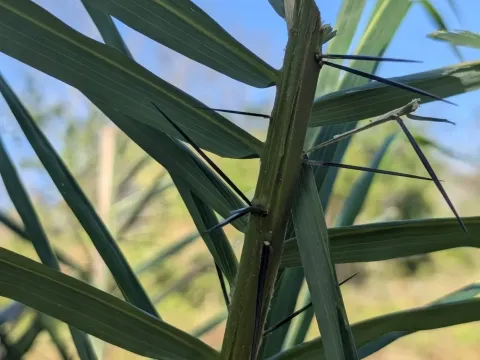
Acrocomia vinifera
Acrocomia vinifera
Acrocomia vinifera is a distinctive member of the Arecaceae family, originating from the tropical landscapes of Central and South America. This palm species is highly valued for its adaptability to diverse environmental conditions within its native range.
What the section contains
Acrocomia vinifera
The plant thrives in well-draining, nutrient-rich soils that provide consistent moisture without waterlogging the roots. It is essential to ensure that the planting site receives ample solar radiation, as this palm requires high light intensity for optimal canopy development.
Climate requirements include tropical temperatures consistently above 22 degrees Celsius, as the species is intolerant to freezing weather. The plant prefers regions with a well-distributed rainfall pattern or access to reliable irrigation systems during dry seasons.
Botanically, the palm is characterized by a robust, often spine-covered trunk and large, pinnate fronds. These features allow the tree to withstand strong tropical winds and manage transpiration effectively in hot, humid environments.
Agronomic management involves regular weeding and the application of balanced fertilization to support rapid juvenile growth. Maintaining the health of the root zone is critical for the long-term productivity of these perennial plantations.
The primary economic value of Acrocomia vinifera lies in its fruit, which serves as a significant source of vegetable oil. The oil extracted from both the pulp and the kernel is highly versatile, finding use in food manufacturing, cosmetics, and biofuels.
Yield stability is achieved through proper tree spacing, which prevents competition for nutrients and ensures uniform access to sunlight. Productive adult palms can yield significant amounts of fruit clusters, supporting profitable agricultural operations.
Common plant health issues include fungal leaf spots and root rots caused by excessive soil humidity. Implementing good field sanitation practices is the most effective way to minimize the incidence of these pathogens.
Insect pests, particularly palm borers and various coleopterans, represent a major threat to the integrity of the trunk and apical meristem. Integrated pest management strategies, combining manual inspection and targeted treatments, are essential for plantation survival.
Harvesting is performed by identifying ripe fruit clusters that turn a characteristic color indicating peak oil maturity. Due to the height of mature palms, workers often use specialized climbing gear or reach-extending tools to collect the fruit.
Post-harvest handling must be efficient to prevent rapid degradation of the fruit quality. Processing facilities usually debulk the clusters immediately to ensure that the oil extracted remains stable and meets the required standards for industrial or food use.