
Mapleleaf viburnum
Viburnum acerifolium
Description
Growing requirements
Mapleleaf viburnum is a deciduous shrub belonging to the Adoxaceae family, native to the woodlands of eastern North America.
This species thrives in well-drained, organically rich soils. It is known for its remarkable ability to tolerate dry shade, making it a reliable choice for understory planting.
Agricultural practices should focus on maintaining adequate soil moisture during the establishment phase. Pruning is typically performed to maintain the desired shape and promote vigorous growth.
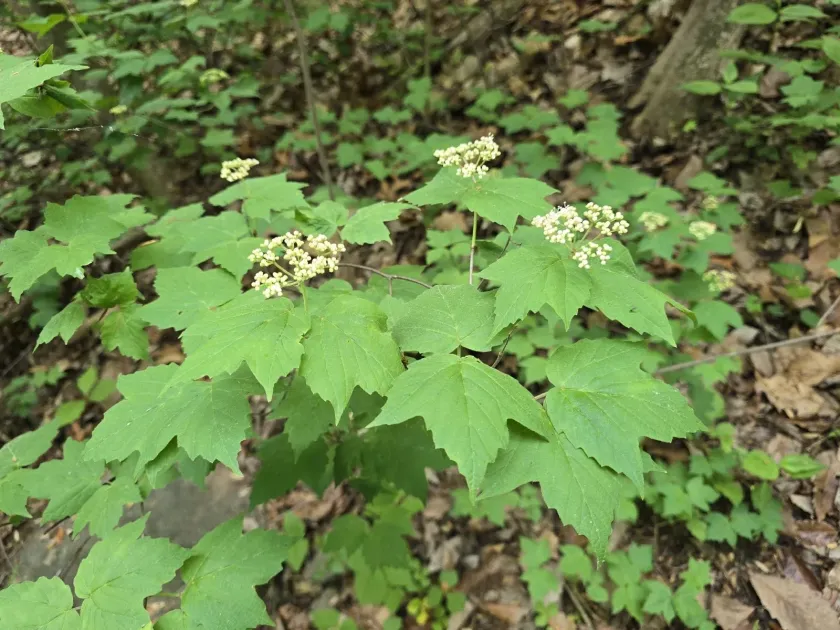
The botanical characteristics feature three-lobed leaves that offer significant aesthetic value, transitioning to attractive shades of purple or pink during the autumn season.
Landscape utilization is primarily decorative. It serves as an excellent hedge plant, a woodland garden specimen, or a naturalistic filler for larger estate landscapes.
Main diseases and pests
The most common disease is powdery mildew, which often appears in late summer, especially if the plants are situated in areas with poor airflow.
Pest issues include viburnum leaf beetles, which can cause significant foliar damage, skeletonizing the leaves if left untreated.
Root rot caused by Phytophthora is a potential threat, primarily in sites with improper drainage or compacted soil conditions.
Effective management involves consistent sanitation, such as removing fallen leaves and pruning away infected branches to reduce the pathogen load.
Integrated pest management strategies, such as introducing beneficial insects or targeted treatments, are recommended for maintaining plant health in high-pressure areas.