
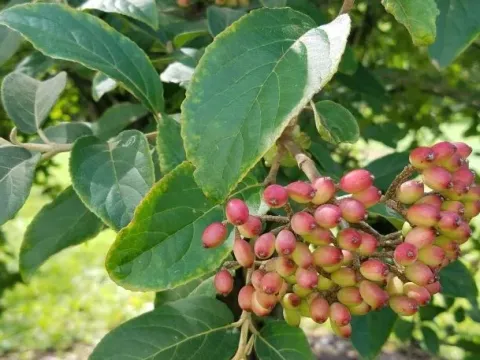
Oriental viburnum
Viburnum orientale
Oriental viburnum (Viburnum orientale) is a deciduous shrub species belonging to the Adoxaceae family. Native to the mountainous regions of the Caucasus and Asia Minor, it has adapted to diverse soil conditions and is appreciated for its resilience and ornamental properties.
What the section contains
Oriental viburnum
The culture requires well-drained, fertile soil that maintains consistent moisture without being waterlogged. It thrives in loamy or sandy soil types with a neutral or slightly acidic pH level, which promotes optimal nutrient uptake from the substrate.
In terms of climate, the plant prefers temperate conditions with sufficient light exposure for maximum flowering and fruit production. While it is hardy, younger specimens benefit from protection against harsh winter winds and sudden frost snaps during the early spring.
Agrotechnical care includes regular soil cultivation around the base and mulching to retain soil moisture during the hot summer months. Pruning should be performed annually to remove dead or diseased wood and to maintain a well-structured, open canopy for better airflow.
The plant is highly valued for both its decorative berries and its nutritional profile. The fruits contain high concentrations of vitamins and antioxidants, making them suitable for use in culinary products such as preserves, juices, and health-promoting syrups.
The viburnum beetle is a major pest for this species, feeding on leaves and often leading to severe defoliation if left unchecked. Early season monitoring and the use of targeted insecticides are recommended to prevent significant damage.
Aphids represent another common challenge, primarily affecting the soft, new growth at the tips of the branches. These insects weaken the plant by sucking nutrients and can also transmit viral infections, necessitating prompt control measures.
Powdery mildew is a prevalent fungal disease that manifests as a white, dusty layer on the foliage. To mitigate the risk of infection, growers should maintain adequate spacing between plants and avoid overhead watering that keeps the leaves damp for extended periods.
Leaf spot diseases, caused by various fungi, may develop during exceptionally wet weather conditions. Maintaining a clean garden environment and applying copper-based fungicides can help manage these outbreaks effectively.
Regular sanitation of the orchard or garden, particularly the removal of fallen leaves and debris, is essential for breaking the life cycle of many pests and diseases that overwinter in the organic litter around the base of the shrubs.