
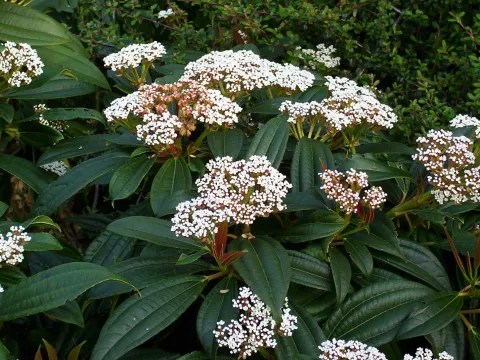
Cinnamon-leaved viburnum
Viburnum cinnamomifolium
Cinnamon-leaved viburnum (Viburnum cinnamomifolium) is a broadleaf evergreen shrub belonging to the Adoxaceae family. It is widely recognized for its striking appearance, featuring leathery, three-veined leaves that bear a remarkable resemblance to those of the cinnamon tree.
What the section contains
Cinnamon-leaved viburnum
Native to western China, specifically the Sichuan province, this species thrives in climates that are relatively mild and stable. It is best suited for regions that do not experience severe, prolonged freezing temperatures, as the foliage can be damaged by harsh winter winds.
The plant requires rich, well-draining soil with a neutral to slightly acidic pH level. High organic matter content is beneficial, as it promotes healthy root development and helps maintain consistent soil structure throughout the growing season.
Light requirements for this species include partial shade or filtered sunlight. While it can adapt to various light conditions, excessive afternoon sun in warmer regions can scorch the glossy leaves, making strategic placement crucial for optimal health.
Agricultural management requires consistent moisture, especially during the establishment phase. Using organic mulch around the base is a standard practice to retain soil moisture and stabilize soil temperatures against rapid fluctuations.
Common pathological threats include various leaf spot fungi which typically manifest during periods of high humidity. Proper airflow management is essential to prevent these infections from spreading throughout the shrub canopy.
Pests such as aphids and scale insects are frequent challenges for this Viburnum species. These pests typically congregate on the underside of leaves or on succulent new growth, extracting vital sap and reducing the plant's overall vigor.
Effective management strategies involve monitoring the shrub throughout the spring and early summer. If an infestation is detected, integrated pest management protocols should be implemented to minimize chemical exposure while protecting the plant.
Root rot represents a severe physiological threat resulting from poor drainage or overwatering. Ensuring the soil does not remain waterlogged is the primary defense against these soil-borne pathogens that target the root system.
Regular maintenance pruning is recommended to remove dead or diseased wood. This practice not only improves the structural integrity of the plant but also denies potential nesting sites for common garden pests and reduces fungal inoculum.