
Densely-flowered viburnum
Viburnum dasyanthum
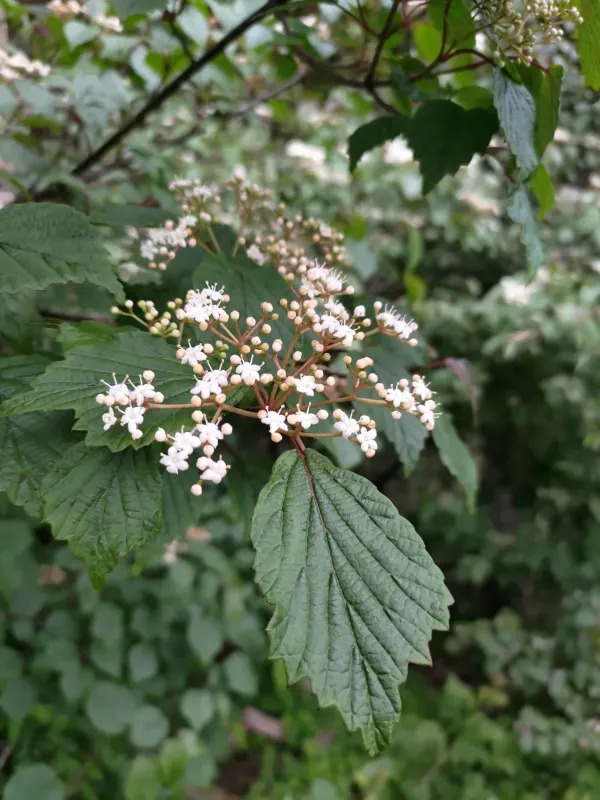
Description
Growing requirements
Densely-flowered viburnum (Viburnum dasyanthum) is a deciduous shrub belonging to the Adoxaceae family. Its natural origin is traced back to the mountainous regions of East Asia, where it thrives in forest margins and mountainous thickets.
This shrub requires fertile, well-drained, and moisture-retentive soils to achieve optimal growth. While it tolerates a variety of soil types, it performs best in neutral to slightly acidic loam soils rich in organic matter, which mimic its natural forest habitat.
Regarding its botanical profile, the plant is known for its dense inflorescences of small flowers, which appear during the spring and early summer. The foliage is relatively thick, providing a dense canopy that serves as an excellent feature in both ornamental gardens and wild-simulating landscapes.
Agronomic management includes maintaining consistent soil moisture, especially during the peak of the growing season. Applying organic mulch around the base of the plant is highly recommended to suppress weed growth and regulate soil temperature.
As for environmental requirements, the plant appreciates a position with partial shade but can adapt to full sun provided that the water supply is adequate. It is considered sufficiently hardy for temperate zones, showing good tolerance to seasonal fluctuations.
Main diseases and pests
The primary pests affecting this species include aphids and the viburnum leaf beetle, which can lead to significant defoliation if left unmanaged. Regular monitoring of the underside of leaves and branch tips is essential for early detection.
Fungal pathogens such as powdery mildew can be problematic in high-humidity areas with poor air circulation. Proper spacing between individual plants and judicious pruning to thin the canopy are effective strategies to prevent the onset of these diseases.