
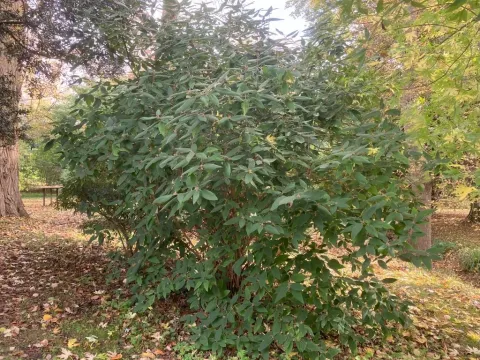
Buddleia-leaf viburnum
Viburnum buddleifolium
Buddleia-leaf viburnum Viburnum buddleifolium is an ornamental deciduous shrub belonging to the Adoxaceae family. It is native to China and is distinguished by its unique leaf structure, which bears a striking resemblance to the Buddleia genus. This botanical feature makes it a prized specimen for collectors and landscape designers.
What the section contains
Buddleia-leaf viburnum
The plant thrives in fertile, well-drained soils with a slightly acidic to neutral pH level. It is sensitive to waterlogging, so planting on raised beds or ensuring a proper drainage layer is essential for healthy root development. It performs best in sites with dappled shade, which protects the foliage from scorching during peak summer temperatures.
Climate requirements for this species include moderate temperatures and protection from cold, drying winter winds. While it is hardy in many temperate zones, young plants require winter protection for the first few seasons to ensure successful establishment. Adequate moisture is crucial during the active growing season for optimal development.
Cultural practices include regular pruning to maintain an aesthetic shape and improve air circulation within the canopy. Fertilization with a balanced organic or slow-release fertilizer in early spring encourages lush growth and reinforces the plant's structural integrity. Mulching is highly recommended to regulate soil temperature and moisture levels.
In terms of utilization, this viburnum is primarily used for landscaping and ornamental horticulture. It is frequently employed as a focal point in borders, a component of mixed shrubbery groupings, or as a structural hedge. Its distinct foliage adds a sophisticated texture to any garden design, setting it apart from more common shrub varieties.
Common pests affecting Buddleia-leaf viburnum include aphids and leaf-eating beetles, which can cause significant damage to new growth during the spring season. Integrated pest management, including the use of neem oil or systemic insecticides when necessary, is the most effective way to manage these infestations effectively.
Fungal diseases, such as powdery mildew and leaf spot, are prevalent in regions with high humidity or poor air circulation. These pathogens form visible spores on leaves and can cause premature defoliation if left untreated. Application of fungicides and maintaining proper distance between plants are key prevention strategies.
Good sanitation practices, such as removing fallen leaves at the end of the season, are vital to break the life cycle of many pathogens that overwinter in plant debris. This simple act significantly reduces the inoculum pressure for the following spring and ensures a healthier environment for the shrub.
Viral pathogens may occasionally affect the plant, manifesting as stunted growth or mottled leaf discoloration. Since there is no cure for viral infections in ornamental shrubs, early detection and the removal of the affected specimen are mandatory to protect the surrounding plants from further transmission.
Monitoring the overall vitality of the plant through regular inspections is an essential part of the care routine. By maintaining optimal soil fertility and providing consistent watering, gardeners can boost the plant's natural resistance, thereby reducing the vulnerability of the viburnum to common environmental stressors.