
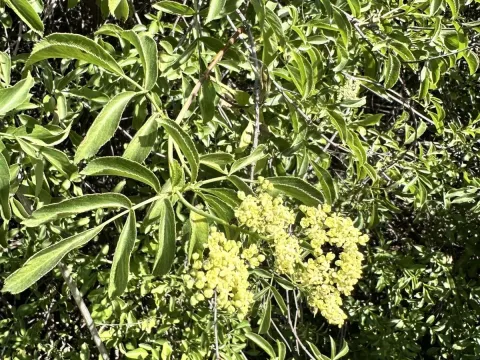
Blue elderberry
Sambucus cerulea
Blue elderberry is primarily propagated through vegetative methods, such as hardwood or softwood cuttings taken during the active growing season.
What the section contains
Blue elderberry
For best results, cuttings should be placed in a well-draining rooting medium with consistent moisture and protection from direct midday sunlight.
Seed propagation is also common, requiring cold stratification for several months to break dormancy and ensure successful germination in the spring.
When establishing a plantation, spacing should be set between 3 and 4 meters to accommodate the bush's mature size and ensure air circulation.
Transplanting container-grown bushes is the most reliable method for success, allowing the root system to establish quickly with minimal stress.
Blue elderberry belongs to the Adoxaceae family and is recognized as a hardy, deciduous shrub or small tree native to Western North America.
This species thrives in full sun but demonstrates impressive tolerance for partial shade, making it a versatile plant for various landscape configurations.
It prefers deep, fertile, well-draining soils and is notably more tolerant of alkaline soil conditions compared to other species of the Sambucus genus.
The shrub is highly adaptable to a range of moisture levels, though it performs best in soils that retain moderate humidity throughout the summer.
It is valued for its drought resistance once established, which allows it to persist in regions with low rainfall without requiring constant supplemental irrigation.
Productive fruiting typically begins within 3 to 4 years of growth, with yields increasing significantly as the plant reaches full maturity.
The berries are easily identified by their deep blue to black color, covered in a distinctive glaucous, powdery bloom that gives them a lighter appearance.
The fruit is used commercially for producing syrups, jellies, juices, and as a natural source of pigments for the food and supplement industries.
Strategic pruning is essential to maintain high yields, as the most vigorous fruit production occurs on younger, second- or third-year wood.
Proper harvest management ensures high-quality fruit, as the berries are delicate and highly perishable once they have reached their peak ripeness.
Common pests include aphids, which may cluster on new growth, and spider mites, which can cause leaf discoloration during hot, dry periods of the season.
Fungal diseases like powdery mildew are the primary concern, especially in environments where humidity is high and airflow within the canopy is restricted.
Management of these threats involves cultural practices like thinning the crown to improve light penetration and airflow, reducing the humidity around the leaves.
If chemical or biological intervention is required, applications should be timed carefully to avoid harming beneficial pollinators visiting the flowers.
Sanitation practices, such as removing fallen leaves and pruning away infected branches, play a critical role in preventing recurring infestations.
The harvest occurs when the berries have turned a deep, uniform blue color and have developed their characteristic waxy, white bloom.
Berries are harvested by cutting the entire cluster (cyme) from the branch, which is the most efficient way to maintain the integrity of individual fruits.
It is recommended to conduct harvesting operations in the early morning to ensure the fruit remains cool and firm during the initial handling stage.
Immediate processing is crucial because the berries have a high sugar and water content, making them susceptible to rapid spoilage after removal from the bush.
For storage, berries can be frozen or dehydrated to preserve their nutritional and chemical properties for later use in various food and medicinal products.