
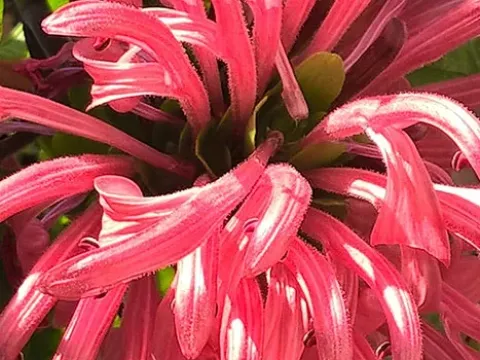
Jacobinia
Jacobinia
Jacobinia, now commonly classified within the genus Justicia, belongs to the Acanthaceae family. It is a popular evergreen tropical shrub native to the rainforests of South and Central America.
What the section contains


Jacobinia
In a controlled agricultural or nursery environment, Jacobinia thrives in bright, filtered light. Exposure to intense midday sun is generally discouraged as it leads to leaf scorch and premature drop of foliage.
Temperature management is critical for this species. It prefers temperatures between 20°C and 25°C during the day. During the winter dormancy phase, temperatures should not fall below 15°C to avoid metabolic shock.
The substrate must be well-draining, nutrient-rich, and slightly acidic. A mix of peat, perlite, and organic compost is generally recommended to provide the necessary moisture retention without causing root rot.
Regular maintenance involves pruning after the flowering season to encourage lateral branching and denser growth, ensuring the plant remains compact and productive in its decorative capacity.
Spider mites are the most common pest associated with Jacobinia, especially in low-humidity environments. They cause stippling on the leaves and can significantly weaken the plant if left untreated.
Scale insects present a secondary threat. These pests attach themselves to the stems and leaf veins, extracting sap and leaving behind honeydew, which can further encourage sooty mold growth.
Fungal diseases, such as root rot or Botrytis, often emerge if the substrate remains waterlogged for extended periods. Proper drainage is the primary defense mechanism against these pathogens.
Whiteflies may occasionally infest the plant in greenhouse settings. Management requires the use of biological controls or specialized horticultural oils that are safe for the foliage.
- Monitoring for pest infestations on a weekly basis.
- Implementing proper spacing to ensure adequate air circulation.
- Avoiding overhead watering to minimize fungal leaf infections.