
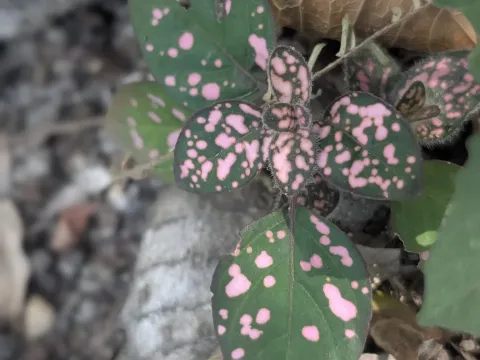
Hypoestes
Hypoestes Soland. ex R. Br.
Hypoestes can be propagated via seeds or stem cuttings. Seed sowing is typically performed in late winter or early spring to ensure robust plantlets are ready for the main growing season.
What the section contains

Hypoestes
For sowing, use a light, well-draining substrate rich in peat. Seeds should be pressed into the surface and covered with a plastic cover to maintain high humidity levels for germination.
Maintain a constant temperature between 22 and 25 degrees Celsius. Adequate light is essential from the moment of germination to prevent the seedlings from becoming leggy.
Prick out seedlings into individual pots once the first true leaves have fully developed. Continue to provide bright, indirect sunlight to encourage branching and leaf coloration.
Cuttings can be taken from apical stems throughout the growing season. They root readily in water or a moist perlite medium at room temperature within 2-3 weeks.
Hypoestes is a member of the Acanthaceae family, native to tropical regions of Madagascar and South Africa. It is prized for its variegated, colorful leaves which require intense indirect light to maintain their pattern.
The optimal temperature range is 20-25 degrees Celsius. The plant is sensitive to cold drafts and temperatures below 15 degrees, which can lead to leaf drop and stunted development.
The soil should be fertile and slightly acidic with excellent drainage properties. A mixture of loam, peat moss, and sand is recommended to ensure both moisture retention and root aeration.
High air humidity is crucial for the health of Hypoestes. Regular misting or placing the pot on a pebble tray with water helps replicate the humid environment of its natural tropical habitat.
Watering should be frequent but balanced. Never allow the soil to dry out completely, but ensure the drainage system prevents water from stagnating in the pot to avoid root disease.
The spider mite is the most common pest, especially in low-humidity environments. Regular inspection and increasing air moisture are the primary methods of preventing infestations.
Aphids and mealybugs may also attack young succulent growth. Targeted insecticidal soap sprays or systemic treatments are effective in controlling these outbreaks if detected early.
Root rot is a major threat resulting from overwatering or poor drainage. It presents as wilting despite soil moisture and requires immediate repotting and soil replacement.
Insufficient light intensity causes the plant to lose its vibrant leaf markings, resulting in a dull, green appearance. Moving the plant to a brighter location usually resolves this.
Fungal leaf spot diseases can occur if the foliage remains wet for extended periods. Proper ventilation and avoiding water on the leaves during irrigation are key management strategies.