
Hemigraphis
Hemigraphis
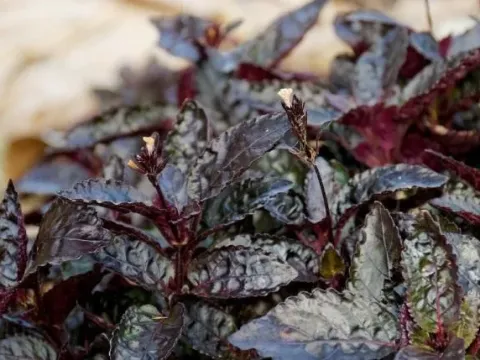
Hemigraphis is a genus of herbaceous perennial plants belonging to the Acanthaceae family. It is widely recognized in horticulture for its unique, often purple-tinted foliage, making it a popular choice for ornamental use.
What the section contains


Hemigraphis
Originating from the tropical regions of Southeast Asia, the plant thrives in environments characterized by high humidity and consistent warmth. It is typically grown as a greenhouse or indoor crop in non-tropical climates.
For cultivation, Hemigraphis requires a well-draining, nutrient-rich potting mix with an slightly acidic to neutral pH. A mix based on peat moss and organic matter is generally recommended to retain moisture without waterlogging.
Light management is critical: the plant requires bright, indirect light. Direct sunlight can cause scorching of the leaves, while insufficient light leads to poor coloration and weak, elongated stem growth.
Maintaining a stable temperature between 20 °C and 25 °C is essential. The plant is extremely sensitive to cold drafts and temperatures below 15 °C, which can cause significant physiological stress and defoliation.
The most common pests affecting Hemigraphis are spider mites and mealybugs. Spider mites particularly thrive when the ambient humidity is too low, necessitating regular misting or humidity control.
Fungal issues, primarily root and stem rots, occur due to overwatering or poor drainage. These pathogens thrive in waterlogged soil and can quickly compromise the plant's vascular system.
Integrated pest management involves monitoring foliage for webs or cotton-like residues. Early detection allows for the application of neem oil or targeted insecticidal soaps to mitigate populations without plant damage.
Cultural control is the most effective strategy. By ensuring adequate spacing between pots and maintaining proper air circulation, the risk of fungal spread and pest colonization is significantly reduced.
Regular pruning serves multiple purposes: it encourages bushier growth, removes damaged tissue that might harbor pathogens, and facilitates the propagation of new healthy stems for crop replacement.