
Hemigraphis hirta
Hemigraphis hirta
Description
Growing requirements
Hemigraphis hirta is a perennial herb belonging to the Acanthaceae family. Native to the tropical regions of Southeast Asia, it is typically found in understory environments characterized by high humidity and filtered sunlight.
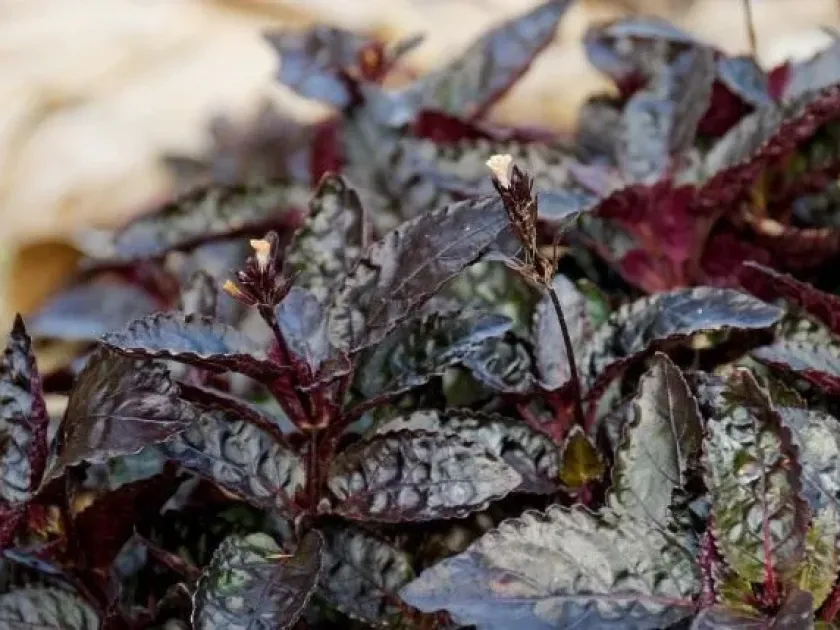
The plant features creeping stems that readily root at the nodes, allowing it to form a dense ground cover. Its foliage is notably hirsute (hairy), which provides protection against moisture loss and gives the leaves a unique texture and appearance.
Optimal growth is achieved in warm environments with temperatures consistently between 20 and 26 degrees Celsius. It is highly sensitive to cold stress and must be kept away from direct, harsh sunlight to prevent leaf scorch and desiccation.
Soil requirements include a well-draining, nutrient-rich substrate, preferably with a slightly acidic to neutral pH. Maintaining consistent soil moisture is crucial, as the plant does not tolerate prolonged periods of drought.
In addition to its use as an ornamental ground cover, Hemigraphis hirta is studied for its chemical profile. It is often cultivated for its aesthetic appeal in indoor gardens or botanical conservatories where high-humidity conditions can be regulated.
Main diseases and pests
Pests commonly associated with this species include spider mites, which thrive in low-humidity environments. Regular monitoring of the leaf undersides is recommended to detect early infestations before they spread across the crop.
Fungal pathogens such as root rot can occur if the substrate remains waterlogged for extended periods. Implementing a strict irrigation schedule and ensuring good airflow around the plants are critical measures for disease prevention.