
Fittonia albivenis
Fittonia albivenis (Lindl. ex hort. Veitch) Brummitt
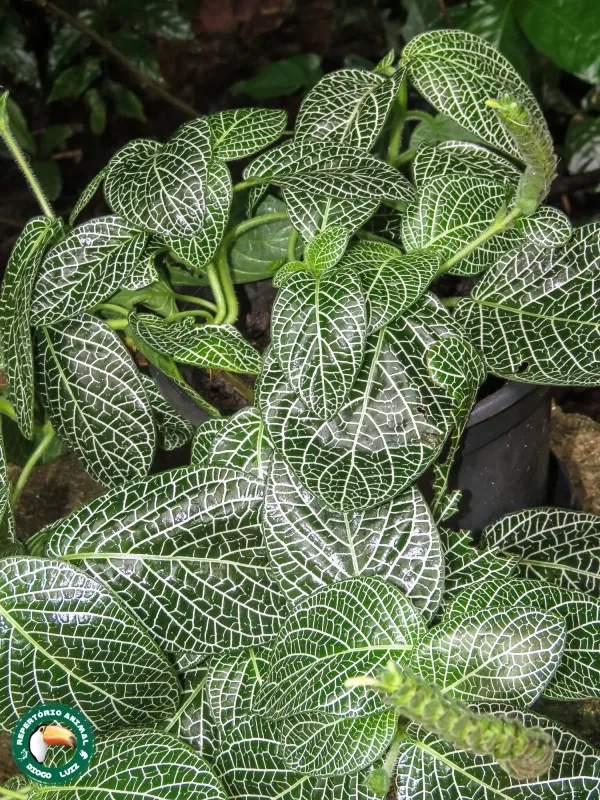
Description
Growing requirements
Fittonia albivenis is a perennial evergreen herb belonging to the Acanthaceae family, widely recognized for its vibrant, nerve-patterned foliage.
Native to the tropical rainforests of South America, this species thrives in humid, shaded environments, typically occupying the forest floor beneath the canopy.
In a controlled cultivation setting, it requires temperatures consistently between 22 and 26 degrees Celsius to maintain healthy growth and leaf pigmentation.
High relative humidity is the most critical environmental factor; the plant performs best in terrariums or specialized greenhouse conditions to prevent leaf desiccation.
The substrate must be well-draining, moisture-retentive, and slightly acidic, ensuring that roots are supplied with oxygen while avoiding waterlogged conditions.
Main diseases and pests
Common pests include spider mites, mealybugs, and scale insects, which often proliferate when the plant is stressed by inadequate air humidity or poor air circulation.
Pathogenic fungi can cause root rot, especially in stagnant soil, which is the most significant threat to the overall survival and vigor of the Fittonia crop.