
Lehmann's gum
Eucalyptus lehmannii
Lehmann's gum (Eucalyptus lehmannii) is a distinct species of the Myrtaceae family, native to the Western Australian landscape. It is highly valued for its ornamental inflorescences and robust growth habit in Mediterranean-like climates.
What the section contains
Lehmann's gum
The culture thrives in well-drained, sandy, or gravelly soils that provide excellent aeration. It is critically sensitive to waterlogged environments, which can lead to rapid root decay, requiring careful selection of planting sites with natural slope or drainage systems.
Regarding climate, this species prefers regions with mild winters and hot, dry summers. While it exhibits strong drought tolerance once established, irrigation is essential during the initial planting phase and throughout the peak summer growing season.
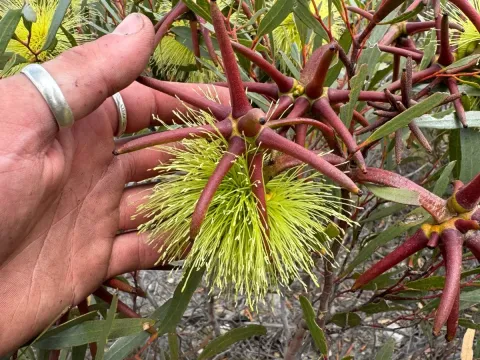
Botany-wise, the species is distinguished by its unique, fused, horn-shaped flower buds that open into bright yellow-green clusters. Its foliage is evergreen, providing year-round cover and acting as a windbreak in managed forestry settings.
Agricultural management should prioritize maintenance pruning to keep the canopy healthy and to remove deadwood. Nitrogen and phosphorus levels in the soil should be monitored, as the species is adapted to nutrient-poor Australian soils and does not require heavy fertilization.
Root rot caused by Phytophthora species represents the most significant threat to the health of Lehmann's gum plantations. Strict adherence to irrigation protocols and site drainage is the primary defense against this pathogen.
Insect pests, including various species of leaf beetles (Chrysomelidae), can cause defoliation if left unchecked. Integrated Pest Management (IPM) practices, involving biological control agents and targeted spraying, are recommended.
Powdery mildew may develop in areas with high humidity and insufficient air movement. Ensuring adequate spacing between trees is vital to improve airflow and minimize the conditions that favor fungal outbreaks.
Sap-sucking insects like aphids can cluster on tender shoots, hindering growth and acting as vectors for viral diseases. Early detection through regular field scouting allows for swift intervention with horticultural soaps or oil-based sprays.
Sanitation is key to managing plant threats, which involves removing debris from under the trees and disinfecting tools used for pruning. By maintaining a clean growing environment, producers can significantly reduce the pressure from common eucalyptus pests.