
Eugenia axillaris
Eugenia axillaris
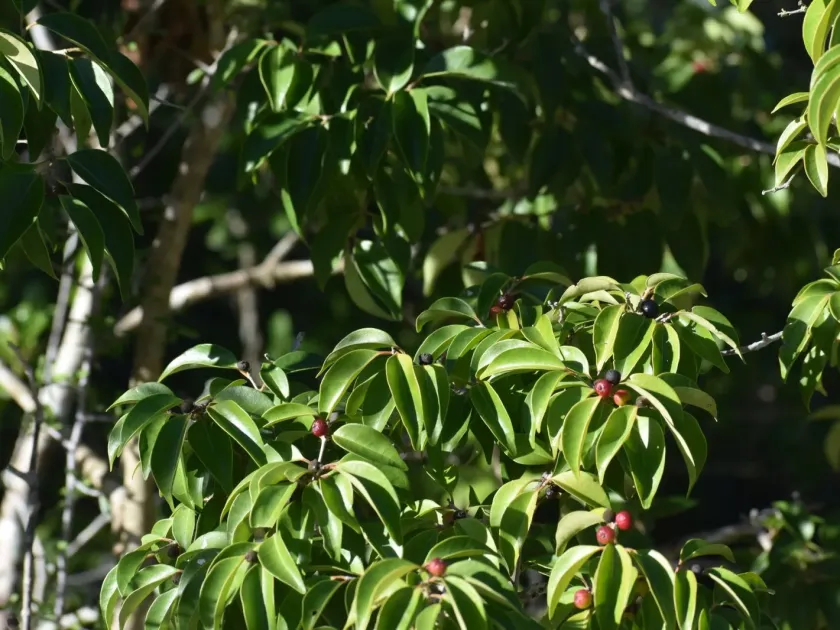
Description
Growing requirements
Eugenia axillaris, commonly known as the Red Stopper, is an evergreen shrub or small tree belonging to the Myrtaceae family. It is highly valued for its dense, glossy foliage and its ability to act as a significant screening plant in tropical landscapes.
The species is native to the coastal regions of the southeastern United States, Mexico, and the Caribbean. It thrives in diverse environmental conditions, showing high resilience to salt spray and sandy soil structures found in maritime habitats.
Optimal growth requires full sun exposure, although the plant can tolerate partial shade. Soil requirements are flexible, provided that the substrate is well-drained, as constant waterlogging will negatively affect the root system and plant health.
Temperature management is crucial, as this plant is essentially tropical. It does not tolerate prolonged freezing temperatures and must be protected during cold spells if grown in pots or in the northern reaches of its potential cultivation range.
Regarding its utility, Eugenia axillaris serves as an excellent ornamental hedge due to its tolerance to frequent pruning. Furthermore, it produces small, dark fruits that are edible and highly appreciated by local wildlife, especially birds, making it a staple in ecological gardens.
Main diseases and pests
Common pests affecting Eugenia axillaris include aphids and scale insects, which can cluster on new growth. Management involves physical removal and the application of horticultural oils if infestation levels rise significantly.
Fungal issues, particularly leaf spot diseases, may occur in high-humidity climates with poor air circulation. Proper spacing during planting and pruning of the inner canopy can significantly reduce the risk of such infections.