
Illyarrie
Eucalyptus erythrocorys
Description
Sowing dates
Eucalyptus erythrocorys, commonly known as Illyarrie, is a distinctive member of the Myrtaceae family native to Western Australia.
Propagation is primarily achieved via seeds, which should be sown in a well-draining, sandy-based potting mix to mimic their natural habitat.
Seeds require light for germination and should be sown on the surface of the growing medium, covered lightly with vermiculite or fine sand.
A consistent temperature of 20–25°C is ideal for successful germination, ensuring the soil remains moist but never waterlogged to prevent fungal damping-off.
Seedlings should be transplanted into deep containers as soon as they are large enough to handle, allowing for proper development of the taproot system.
Growing requirements
As a native of dry coastal regions, this species thrives in full sun and requires excellent ventilation to prevent foliage diseases.
Soil requirements include well-draining, sandy, or gravelly substrates that prevent the accumulation of excess moisture around the root zone.
Climatic preferences include hot, dry summers and mild winters; however, the tree exhibits some tolerance for seasonal temperature fluctuations.
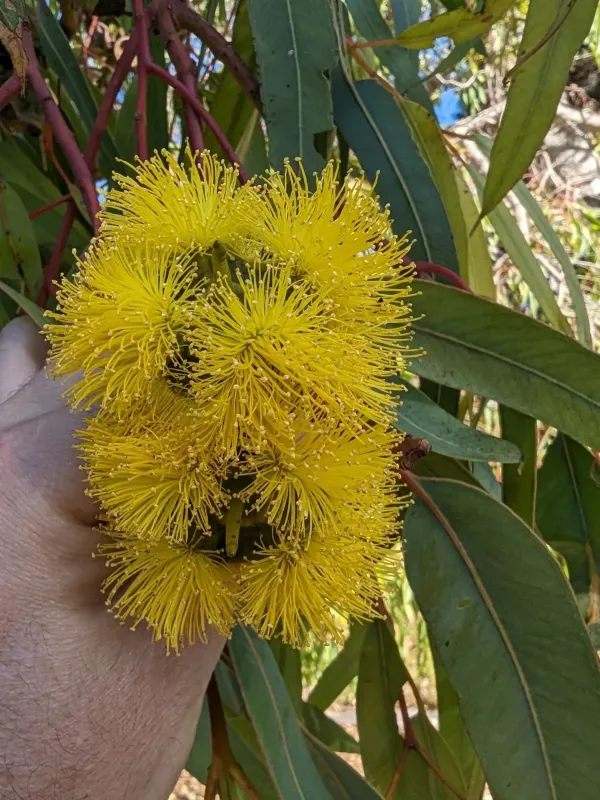
Botanically, it is famous for its large, bright red opercula (caps) that protect the yellow stamens before blooming, making it a standout ornamental specimen.
Growth habit is generally shrubby or small-tree sized, typically reaching 3 to 5 meters in height, with smooth, pale bark that sheds periodically.
Main diseases and pests
Eucalyptus erythrocorys is generally hardy, but it can be susceptible to root rot if grown in heavy, poorly drained soil conditions.
Pests such as scale insects and spider mites may occasionally infest the foliage, especially in greenhouse environments with limited air movement.
Regular inspection of the undersides of leaves and stems is essential for early detection of pest populations and preventing major infestations.
Biological controls or horticultural oils are recommended for managing common pests, ensuring the chemical balance of the plant is not overly disrupted.
Maintaining a balanced irrigation schedule that allows the soil to dry out between waterings is the most effective preventative measure against root-related pathogens.
Harvesting
The primary utility of Eucalyptus erythrocorys is in landscape architecture and as an ornamental plant in temperate and Mediterranean-style gardens.
Seed collection for propagation is carried out when the woody capsules turn brown and begin to release seeds, typically in the late season.
The branches of the Illyarrie are often harvested for the floriculture industry, as the unique red caps provide excellent aesthetic value for exotic arrangements.
When harvesting for floral use, tools must be sanitized to protect the health of the tree and ensure a clean cut that heals quickly.
Post-harvest care involves keeping the stems in cool, dry storage to maximize longevity and maintain the vibrant color of the caps and foliage.