
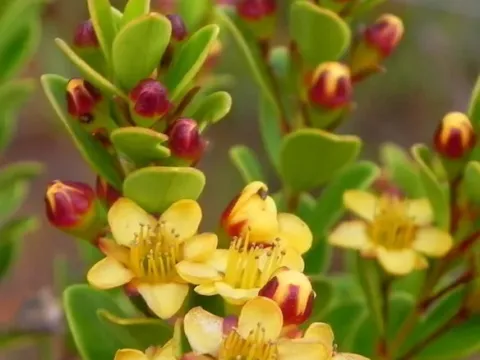
Cloezia
Cloezia
Cloezia is a genus of evergreen woody plants belonging to the Myrtaceae family. These plants are endemic to the island of New Caledonia, where they grow in unique, highly specialized ecosystems, often restricted to ultramafic soils that are rich in heavy metals but low in essential nutrients.
What the section contains

Cloezia
Botanically, Cloezia species are characterized by their leathery, persistent leaves and floral structures that follow the typical Myrtaceae architecture, often featuring clusters of stamens. These morphological adaptations allow them to thrive in high-humidity tropical environments while conserving water through structural leaf density.
For cultivation, Cloezia requires a tropical climate with high ambient humidity and stable temperatures. Because these plants are adapted to very specific geological substrates, successful propagation in a controlled environment necessitates a custom soil mix that mimics the drainage properties and chemical profile of their native habitat.
The economic and practical use of Cloezia is primarily focused on botanical research and rare plant collections. It is not grown as a standard commercial crop but holds significant value for researchers studying the evolution and adaptation of the Myrtaceae family in insular environments.
Agtrotechnical management of Cloezia is complex and requires specialized nursery equipment. Propagation is usually achieved through seeds or micro-cuttings, both of which require sterile conditions and precisely calibrated irrigation to avoid moisture stress on the developing root system.
Pathogenic fungi are the primary threat to Cloezia in controlled environments. Root rot and damping-off disease are common occurrences if the irrigation frequency is not perfectly aligned with the plant's metabolic rate, which is relatively slow compared to common agricultural cultivars.
Pest management involves regular monitoring for sucking insects, particularly spider mites and mealybugs. Due to the plant's sensitivity to synthetic chemicals, integrated pest management (IPM) strategies, including the use of beneficial predators and biological extracts, are preferred to ensure the plant's long-term survival.