
American fig
Ficus americana Aubl.
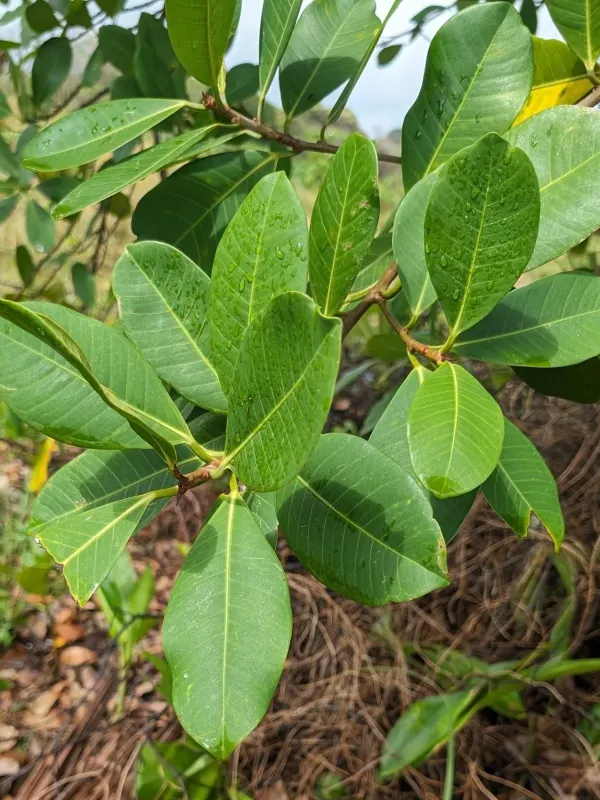
Description
Growing requirements
The American fig (Ficus americana) is a notable member of the Moraceae family. In its native habitat, it typically grows as a woody perennial, often starting life as a hemiepiphyte that eventually develops thick, woody trunks and extensive root systems capable of supporting the plant in diverse tropical conditions.
Originating from the tropical regions of the Americas, this species is well-adapted to high-humidity environments. Its natural range extends through various Caribbean islands and Central/South American territories, where it thrives in warm, stable climates throughout the year.
For successful agricultural management, the plant requires consistent temperatures ranging from 22 to 28 degrees Celsius. Extreme temperature fluctuations, especially sudden drops below 15 degrees, can significantly stress the plant, leading to stunted growth or total physiological collapse.
Soil requirements for Ficus americana focus on high aeration and excellent drainage. A substrate composed of organic matter mixed with perlite or coarse sand is recommended to prevent root hypoxia, which is a common issue when plants are grown in heavy or poorly draining soils.
Lighting management is essential for healthy development. While the species is accustomed to tropical sun, it prefers bright, filtered light. Industrial cultivation under glass requires the use of shading cloths to prevent leaf scorching while ensuring sufficient light energy for the photosynthetic process.
Main diseases and pests
The most significant pathological threats to Ficus americana are root pathogens, specifically Phytophthora and Pythium species. These fungi thrive in waterlogged soil conditions, leading to the rapid decay of the root system and systemic wilting of the plant.
Common insect pests include spider mites (Tetranychidae), which proliferate in dry, warm environments. These pests feed on the cellular contents of the leaves, resulting in stippling and eventual necrosis of the foliage if left untreated for an extended period.
Scale insects and mealybugs often present challenges in controlled environments. These pests attach themselves to the stems and leaf undersides, extracting sap and secreting honeydew, which serves as a substrate for the growth of sooty mold, further hindering plant health.
Effective management strategies involve regular monitoring and the implementation of cultural practices that promote air circulation. Avoiding over-fertilization with nitrogen is also recommended, as it can make tissues more succulent and attractive to sucking insect pests.
Chemical control should be employed judiciously, using systemic insecticides only when populations exceed economic damage thresholds. Maintaining high standards of greenhouse sanitation remains the most effective prophylactic measure against the spread of both pests and infectious diseases.