
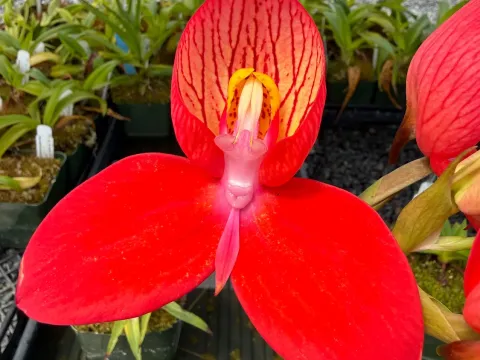
Disa
Disa
Disa is a genus of terrestrial orchids belonging to the Orchidaceae family. In their natural habitat, these plants are primarily found in South Africa, where they have adapted to specific conditions near mountain streams and moist slopes.
What the section contains


Disa
A cool temperature regime is critical for successful cultivation, with many species requiring a distinct drop in temperature during the night. High daytime temperatures can significantly inhibit the development of the root system.
These plants require a specialized substrate that provides high moisture retention while ensuring excellent root aeration. Using standard epiphytic mixes often results in plant decline due to insufficient moisture.
Watering must be done strictly with soft, low-salt water. Waterlogging is detrimental, making a functional drainage system in pots an essential component of the plant's agrotechnics.
Lighting for Disa should be bright but indirect. Direct sunlight during peak hours can cause leaf scorch and lead to a premature loss of the plant's ornamental value.
The primary threat to this culture is fungal infections, which develop under conditions of poor ventilation and excessive substrate moisture.
Root rot is the most common issue, often caused by pathogens that thrive in stagnant water when roots lack adequate oxygen exchange.
Regarding pests, spider mites are frequently reported in Disa crops, as they multiply rapidly in low-humidity environments.
Aphids can also cause damage by infesting young flower stalks and buds, extracting plant sap and deforming future inflorescences.
To prevent these issues, it is recommended to conduct regular plant inspections and maintain strict control over moisture levels and greenhouse ventilation.