
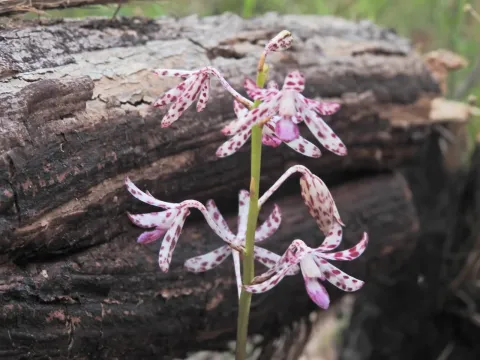
Dipodium
Dipodium
Dipodium is a genus of orchids, not an agricultural crop, and therefore does not have standard sowing dates for commercial production.
What the section contains
Dipodium
In their natural environment, these orchids reproduce via minute seeds that require symbiotic mycorrhizal fungi to germinate successfully.
In a controlled horticultural setting, seeds are sown in sterile laboratory environments on specialized agar-based culture media.
This process requires high precision as the seeds lack endosperm and depend entirely on the nutrients provided in the growth medium.
Propagating these plants is a slow and delicate process that requires patience and expertise in orchid tissue culture techniques.
As members of the Orchidaceae family, Dipodium species require specific conditions that mimic their native habitats in Australia and Southeast Asia.
They thrive best in filtered or indirect light, avoiding harsh midday sun which can easily damage the foliage of many species.
The potting medium must be porous and well-draining, typically consisting of high-quality bark, perlite, and charcoal to prevent root suffocation.
Maintaining a stable temperature range is essential for the healthy vegetative growth and subsequent flowering cycles of these orchids.
Consistent humidity levels, ideally maintained between 60% and 75%, are crucial for ensuring the plants remain robust and disease-free.
The primary threats to Dipodium in cultivation are fungal and bacterial infections, often exacerbated by overwatering and poor air circulation.
Spider mites are common pests that thrive in dry indoor conditions, potentially causing significant leaf damage if left unchecked.
Scale insects and mealybugs can attach to the stems and leaves, extracting vital nutrients and weakening the overall plant structure.
Root rot is a critical threat, usually occurring when the potting medium becomes too dense or when the drainage holes are blocked.
Proactive monitoring and the application of appropriate horticultural oils or systemic insecticides are recommended to manage pest populations.