
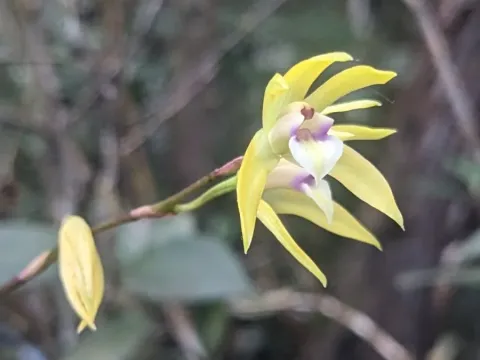
Dilomilis
Dilomilis
Dilomilis is a genus of epiphytic and lithophytic orchids belonging to the Orchidaceae family. These plants are native to the Caribbean region, particularly found in Cuba and Jamaica, where they thrive in humid and mountainous forest environments.
What the section contains

Dilomilis
Botanically, Dilomilis plants exhibit a sympodial growth habit, producing rigid, leathery leaves and upright stems. Their structural adaptation allows them to survive in environments where moisture levels can fluctuate throughout the seasons.
To successfully cultivate Dilomilis, it is essential to mimic their natural tropical habitat. They require high air humidity, ranging from 60% to 75%, and a consistent supply of fresh, circulating air to prevent physiological stress and fungal growth.
The potting medium must be exceptionally well-draining, typically consisting of medium-grade conifer bark, charcoal, and a small amount of sphagnum moss. Proper drainage is critical to prevent the roots from remaining damp for too long, which can lead to rapid decline.
Light requirements for Dilomilis are high, favoring bright but filtered light conditions. Excessive exposure to direct sunlight can damage the leaves, while insufficient light may result in weak, spindly growth and a total absence of floral spikes during the blooming season.
Common pests affecting Dilomilis include spider mites, mealybugs, and scale insects. These pests feed on the plant's sap, weakening it significantly. Early detection and treatment with horticultural oil or systemic insecticides are highly recommended.
Fungal and bacterial infections, such as root rot and leaf spotting, are the most prevalent diseases. These are usually caused by overwatering, poor ventilation, or the use of contaminated substrates, which create an environment conducive to pathogen development.
Root rot is arguably the most common threat to the longevity of the plant. It is characterized by the browning and softening of the root system. Once the roots are damaged, the plant's ability to absorb water and nutrients is severely compromised.
Viral infections are a serious concern in orchid collections, often manifesting as mosaic patterns or distorted growth. Since these are incurable, prevention through the use of sterilized tools and strict quarantine procedures for new plants is mandatory.
Improper fertilization can lead to salt accumulation in the substrate, causing root burn and stunted development. Flushing the pot with distilled water periodically helps mitigate salt build-up and maintains the health of the root zone.