
Dossinia
Dossinia
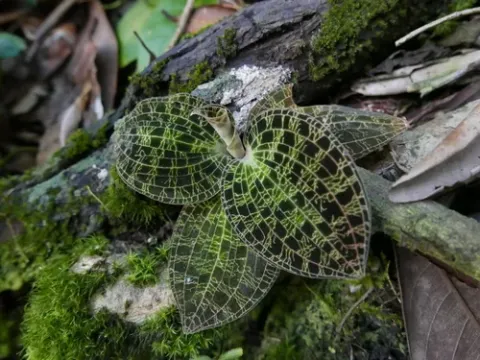
Dossinia is a monotypic genus of terrestrial orchids belonging to the Orchidaceae family. It is widely recognized among botanists and hobbyists as one of the most stunning "jewel orchids," primarily grown for its highly ornamental foliage rather than its flowers.
What the section contains

Dossinia
The plant originates from the tropical rainforests of Borneo. In its natural habitat, it thrives in the understory of dense forests, growing in low-light conditions on decaying organic matter and damp soil, where high humidity levels are maintained consistently throughout the year.
Successful cultivation requires strict adherence to its tropical needs. Growers must provide a stable temperature range between 20°C and 25°C. Dossinia is extremely intolerant of cold drafts and direct, intense sunlight, which can quickly dehydrate and damage its delicate leaves.
The growing medium must be highly porous and moisture-retentive. A typical potting mix consists of long-fibered sphagnum moss, finely chopped fir bark, perlite, and a small amount of charcoal to prevent the accumulation of acidic compounds that could harm the roots.
Dossinia is used primarily for decorative purposes in specialized collections. Due to its sensitivity to humidity, it is almost exclusively grown in terrariums, vivariums, or enclosed display cases where environmental conditions can be precisely controlled by the grower.
The most significant threat to Dossinia is root rot, caused by waterlogged soil and poor aeration. Since the root system is delicate and prone to fungal decay, maintaining a balance between moisture and drainage is the most challenging aspect of its long-term maintenance.
Common pests include spider mites and mealybugs, which tend to infest the plant when ambient humidity drops too low. Regular inspection of the undersides of the leaves is vital, as these pests can rapidly sap the plant's vitality in enclosed environments.
Bacterial leaf spot can occur if water remains trapped in the leaf axils or on the foliage for extended periods. This is particularly problematic in environments with low airflow, where moisture cannot evaporate quickly, creating an ideal breeding ground for pathogens.
Nutrient toxicity is another potential issue for this orchid. Because the plant is adapted to nutrient-poor soil in the wild, over-fertilization can quickly lead to salt buildup in the potting medium, causing the tips of the leaves to brown and die back.
Prevention involves strict hygiene: using sterilized tools, clean water, and well-draining media. If an infestation occurs, physical removal of pests followed by gentle treatment with diluted insecticidal soaps is preferred over harsh chemicals, which the plant cannot easily tolerate.