
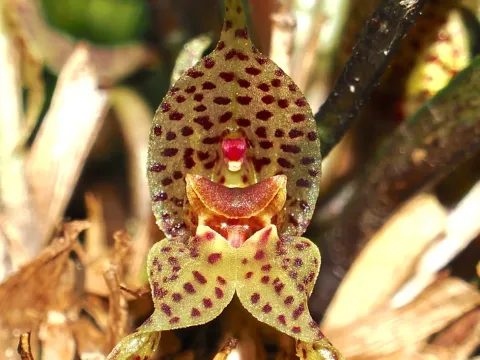
Dryadella
Dryadella
Dryadella is a genus of miniature epiphytic plants belonging to the Orchidaceae family. These plants are native to the cool, humid cloud forests of Central and South America, where they typically grow on tree trunks covered with moss.
What the section contains

Dryadella
Botanically, they lack pseudobulbs, meaning they have very little storage capacity for water and nutrients. This physiological trait dictates their strict requirements for constant humidity and frequent but careful watering in cultivation.
Optimal growth conditions include high humidity levels, ideally between 70% and 85%. Since they originate from high-altitude areas, they require cool temperatures, usually ranging from 15°C to 20°C, with a significant drop at night.
The potting medium must provide excellent aeration while retaining moisture. A mixture of fine fir bark, perlite, and a small amount of live sphagnum moss is considered the industry standard for maintaining healthy root systems.
Bright, filtered light is essential for photosynthesis without the risk of leaf scorch. They thrive in environments where air movement is consistent, which prevents the stagnation of water and the subsequent growth of harmful pathogens.
The most common threats to Dryadella are root rot and bacterial infections caused by overwatering or stagnant air. Once the root system is compromised, recovery is difficult, making preventive maintenance of the substrate health critical.
Pests, particularly spider mites and mealybugs, represent a major risk, especially in environments where humidity is inconsistently maintained. These pests can cause significant leaf damage and weaken the plant's structural integrity.
Integrated pest management should include regular inspection and the use of appropriate horticultural soaps or systemic pesticides. It is crucial to test any chemical treatment on a small part of the plant first to ensure it does not cause toxicity.
Salt accumulation from fertilizers or mineral-rich water can lead to root tip burning. Growers are advised to use high-quality, low-mineral water and to flush the pots periodically with distilled water to prevent buildup.
Maintaining a sterile environment is key; always sanitize pruning tools before and after working with individual plants to avoid cross-contamination of viruses or fungi. Ensuring proper spacing between plants also improves air circulation and reduces risk.