
Dillon's vanilla
Vanilla dilloniana
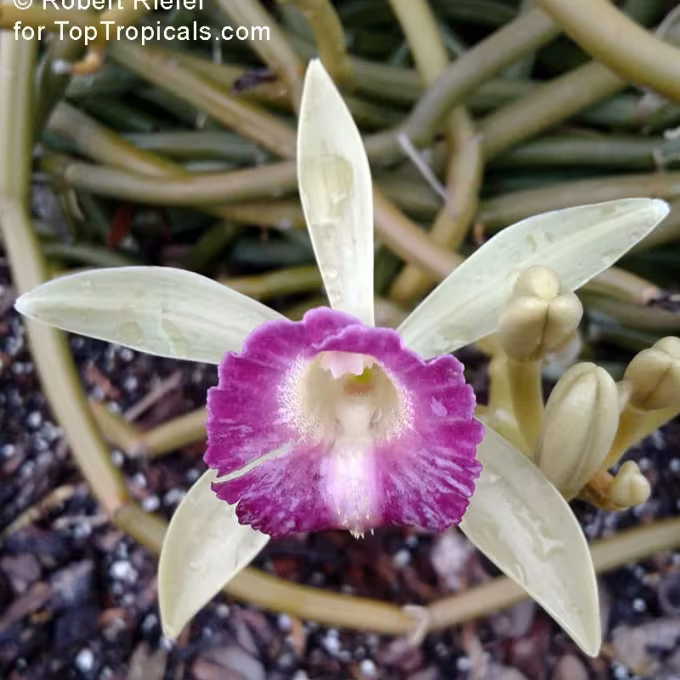
Description
Growing requirements
Dillon's vanilla (Vanilla dilloniana) is an epiphytic orchid species native to the tropical forests of the Caribbean, specifically Cuba and the Bahamas. Like most members of the Vanilla genus, this plant requires environmental conditions that closely replicate its natural humid tropical habitat.
Successful development of this crop requires an ambient temperature range of 22–30 degrees Celsius year-round. The plant is highly sensitive to abrupt temperature fluctuations and exposure to cold drafts, making it suitable only for cultivation in protected environments or specialized greenhouses.
Dillon's vanilla prefers diffused lighting that mimics the filtered light found under a tropical forest canopy. Direct sunlight can cause severe scorching on its succulent stems and leaves, so using shading nets with approximately 50-60 percent light transmission is essential during the growth cycle.
The substrate for this species must possess high levels of aeration and water-holding capacity. Ideal growing media consist of mixtures of pine bark, coconut coir, and charcoal, which ensure adequate oxygen access to the roots and prevent the water stagnation that can be fatal for epiphytes.
Watering should be consistent yet moderate, allowing the top layer of the substrate to dry out slightly between applications. Dillon's vanilla requires high relative humidity, maintained at no less than 70-80 percent, which is best achieved through regular misting or automated fogging systems.
Main diseases and pests
The primary threats to this species are root and stem rots, typically caused by excessive moisture and poor ventilation within the root zone. Proactive management involves the application of systemic fungicides to prevent the proliferation of pathogenic fungi.
Among insect pests, mealybugs and spider mites pose the greatest risk, as they thrive in high-humidity and stable temperature conditions. Frequent visual inspections of the plant foliage are necessary to identify pest colonies early and mitigate potential damage to the stems.
Scale insects can also infest the stems of the vanilla, extracting sap and compromising the plant's overall vigor. Control of these pests requires the application of contact insecticides directly to the affected areas, following strict safety protocols to ensure plant health.
Failure to maintain appropriate humidity levels often leads to leaf spotting diseases of infectious origin. Timely removal of affected plant parts and optimizing the microclimate are considered the most effective methods for managing these common pathological conditions.
A crucial element of plant protection is the implementation of strict quarantine measures when introducing new specimens into a collection. Using sterilized tools for pruning and repotting significantly reduces the risk of transmitting viral infections to which this orchid species is known to be susceptible.