
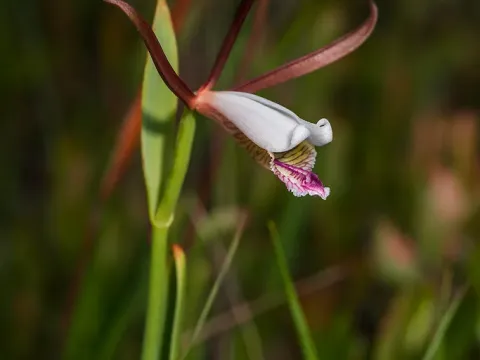
Cleistesiopsis
Cleistesiopsis
Cleistesiopsis is a genus of perennial herbaceous plants belonging to the Orchidaceae family. These plants, often known as pogonias, are native to the southeastern United States, where they inhabit specific ecological niches such as pine barrens and wet prairies.
What the section contains


Cleistesiopsis
The growth of these orchids is heavily dependent on highly acidic and consistently moist soils. They require a specific range of soil moisture and, crucially, a symbiotic relationship with mycorrhizal fungi in the root zone to thrive.
Botanically, they are distinguished by a single leaf located midway up the stem and solitary flowers with specialized structures. Their reproduction is highly specialized, relying on a limited range of insect pollinators to ensure successful fertilization.
There is no agricultural utility for Cleistesiopsis, as these plants are strictly wild species of conservation concern. They are not cultivated as crops and cannot be easily introduced into garden settings due to their extreme sensitivity to soil chemistry.
Maintaining a stable, undisturbed habitat is the only way to support these plants. Agricultural activities in proximity to their habitats, such as fertilizer runoff or soil tilling, can prove lethal to local populations of this genus.
Habitat destruction remains the primary threat to the survival of Cleistesiopsis. Wetland drainage and land development fragment populations, making them prone to extinction due to the loss of their specialized ecological environment.
Fungal pathogens represent a significant threat, particularly when soil moisture levels are disrupted. Excessively wet or dry periods can trigger root rot, which is often fatal to these delicate orchid species.
Pests, particularly snails and slugs, can significantly impact populations by consuming fresh foliage and developing flower buds. This herbivory can prevent the plant from completing its reproductive cycle during a given season.
Invasive plant encroachment is a major factor limiting the success of these orchids. By competing for sunlight and soil nutrients, invasive species can easily outcompete the slower-growing Cleistesiopsis in its native range.
Climate change poses a long-term risk, as altered precipitation patterns affect the specialized wetlands these orchids depend on. Without stable environmental conditions, their highly evolved survival strategies become ineffective against changing pressures.