
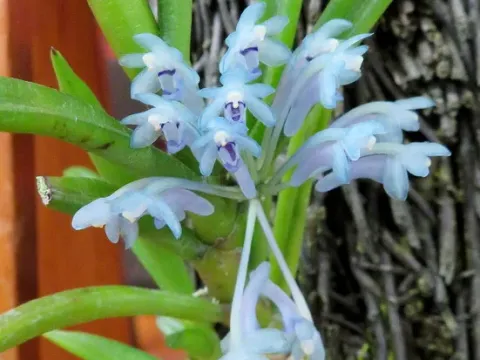
Cleisocentron
Cleisocentron
Cleisocentron is a rare genus of epiphytic orchids belonging to the Orchidaceae family. These plants are native to the tropical forests of Southeast Asia, specifically found in regions such as Vietnam and Borneo, where they thrive in high-altitude forest ecosystems.
What the section contains


Cleisocentron
The cultivation requirements for Cleisocentron are demanding, focusing on mimicking a humid tropical environment. The plants require a stable temperature range, avoiding cold drafts or intense heat waves that could stress the metabolism of this delicate species.
As an epiphyte, Cleisocentron does not grow in traditional soil. It requires a specialized substrate consisting of large bark chips, charcoal, and perlite, which ensures excellent drainage and allows the roots to breathe while maintaining high humidity levels.
Light management is crucial, as the plant needs bright but filtered light to mimic the canopy levels of its natural habitat. Direct sun must be strictly avoided as it will rapidly dehydrate the leaves and lead to severe physiological damage.
The irrigation strategy involves consistent but moderate watering. The roots should be kept moist but never waterlogged. High ambient humidity, ideally above 70%, is essential for the plant to maintain its structural integrity and health throughout the year.
The primary threats to Cleisocentron are fungal infections, which manifest as leaf spotting or root decay. These issues are almost exclusively caused by inadequate air circulation and over-watering, which leads to anaerobic conditions in the root zone.
Pests such as scale insects and spider mites are frequent invaders of these plants. Spider mites are particularly problematic during the drier seasons when the ambient humidity drops below the recommended threshold.
Integrated pest management should be employed, using physical removal of insects followed by targeted applications of organic or chemical solutions if an infestation occurs. Prevention is significantly more effective than treatment for these sensitive orchids.
Strict hygiene practices are necessary when maintaining a collection of Cleisocentron. All cutting tools must be sterilized to prevent the transmission of pathogens between plants, as orchids are highly susceptible to viral and bacterial infections.
A balanced nutrient program is essential to keep the plant robust and resistant to threats. However, over-fertilization can result in salt build-up in the substrate, which harms the sensitive root tips and invites secondary disease outbreaks.