
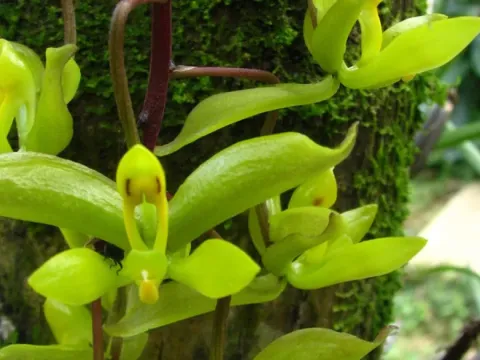
Cirrhaea
Cirrhaea
Cirrhaea is a fascinating genus of epiphytic orchids belonging to the Orchidaceae family. Native primarily to the tropical forests of Brazil, these plants grow naturally on tree trunks, where they absorb moisture and nutrients directly from the surrounding humid air and organic debris.
What the section contains

Cirrhaea
To cultivate Cirrhaea successfully, one must replicate its natural tropical habitat. These orchids thrive in temperatures between 20°C and 25°C during the day, with a significant but safe drop in temperature at night, which is crucial for encouraging healthy vegetative and reproductive growth.
Light requirements are strict: the plants need bright, diffused light rather than direct sunlight. Exposure to harsh afternoon sun can lead to severe leaf scorching, which damages the plant's photosynthetic capacity and weakens its resistance to environmental stressors.
The substrate must mimic the natural epiphytic environment, allowing for excellent aeration and drainage. Mixtures of pine bark, charcoal, and sphagnum moss are standard. Constant moisture is required, yet the roots must never remain soaked in stagnant water, as this triggers rapid decay.
Maintaining high relative humidity, ideally above 70%, is essential for this genus. Regular misting and the use of humidity trays or automated systems are often necessary to prevent dehydration of the pseudobulbs, especially in environments with artificial heating or air conditioning.
Spider mites represent a major threat to Cirrhaea, particularly in low-humidity environments. These pests feed on the cell sap, leading to fine stippling on the leaves and a general decline in the plant's health, which can be mitigated by regular humidity control and acaricide application.
Scale insects often hide in the crevices of the pseudobulbs, making them difficult to detect. Manual removal using cotton swabs dipped in isopropyl alcohol is often the first line of defense before resorting to systemic insecticides to ensure total colony eradication.
Fungal infections, such as root rot and leaf spotting, are common results of poor ventilation and overwatering. If the substrate remains too wet, the roots lose their integrity, requiring immediate repotting and the application of fungicides to save the orchid.
Bacterial soft rot can spread rapidly if water droplets linger on the leaves for too long. Improving air circulation around the plants is the most effective preventive measure, ensuring that foliage dries out completely after any cleaning or humidification process.
Practicing strict hygiene and quarantining new arrivals are fundamental aspects of orchid care. By inspecting plants regularly and keeping the growing area clean, growers can prevent the spread of diseases and pests, ensuring the longevity of their Cirrhaea collection.