
Cleistesiopsis bifaria
Cleistesiopsis bifaria
Description
Growing requirements
Cleistesiopsis bifaria is a perennial herbaceous plant belonging to the Orchidaceae family. This species is native to the eastern parts of North America and is known for its preference for specific habitats.
The plant typically grows in open pine forests, pinelands, and moist meadows. It requires environments that receive filtered to full sunlight to sustain its metabolic processes throughout the growing season.
Regarding soil requirements, it thrives in well-drained, acidic soils. Sand-based or peaty soils that maintain a consistent moisture level without becoming waterlogged are essential for its root system.
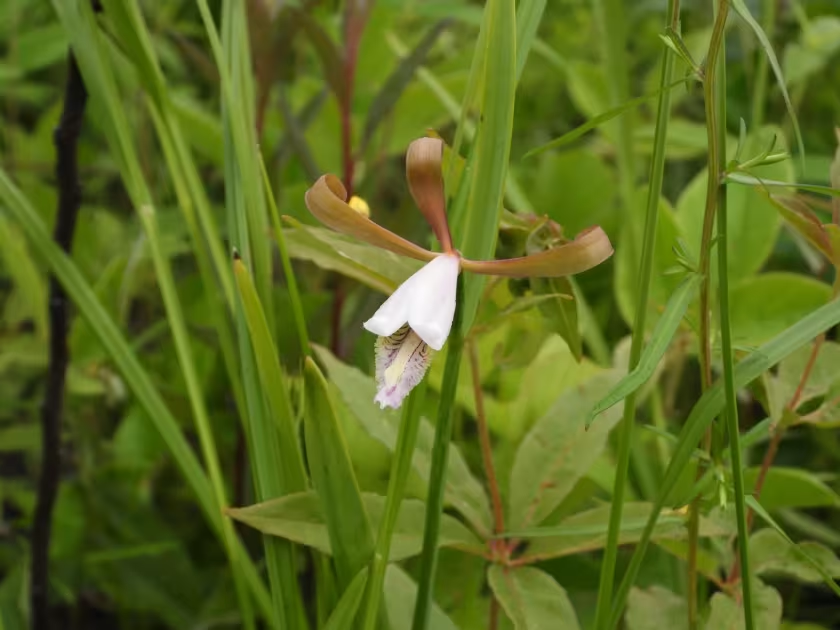
Botanically, the species is identified by two prominent leaves located near the top of the stem. The inflorescence usually bears one or occasionally two flowers with greenish-purple hues that blend with the natural environment.
It must be emphasized that this is not an agricultural crop. It remains a wild species of ecological importance, and its cultivation outside its native range is extremely challenging due to its complex symbiotic relationship with soil fungi.
Main diseases and pests
The primary threat to Cleistesiopsis bifaria is the ongoing loss of its natural habitat. Urban development and conversion of lands into agricultural fields significantly reduce its range.
Fire suppression policies have negatively affected the plant, as it is adapted to fire-maintained landscapes where competition from shrubs and other trees is minimized.
Soil disturbance caused by heavy agricultural machinery or logging practices can destroy the fragile root structures and the delicate balance of soil fungi required for the orchid's survival.
Chemical runoff from nearby fields can alter soil pH levels, making the habitat unsuitable for this acid-loving species and inhibiting its reproductive capacity.
Collection for ornamental or research purposes remains a concern, as individuals are often uprooted by people unfamiliar with the strict environmental requirements needed for these orchids to thrive.