
Cleistesiopsis divaricata
Cleistesiopsis divaricata
Description
Growing requirements
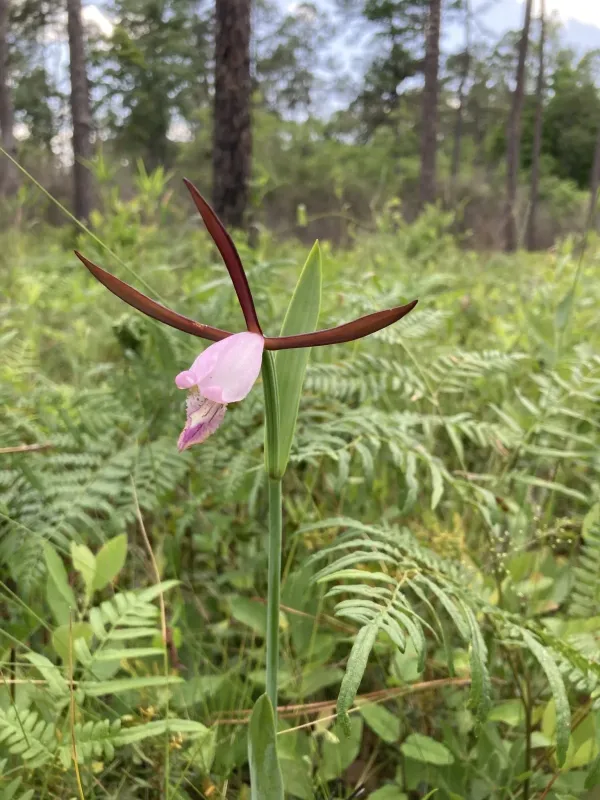
Cleistesiopsis divaricata, commonly known as the Rosebud Orchid or Spreading Pogonia, is a perennial herb belonging to the Orchidaceae family. It is a highly specialized species that serves as an indicator of healthy, undisturbed wetland ecosystems.
The native range of this species is confined to the southeastern United States. It is typically found in moist pine savannas, bogs, and seepage areas, where the soil is highly acidic and organic matter content is significant.
Botanically, the plant is characterized by a single, sessile, lanceolate leaf positioned on the mid-stem, and a solitary flower with long, spreading sepals. The root system relies heavily on symbiotic mycorrhizal fungi to facilitate nutrient uptake in nutrient-poor acidic soils.
Regarding growth requirements, the species demands high moisture levels and a specific soil pH to flourish. It does not tolerate prolonged drought or significant changes to its native micro-habitat, making it challenging to maintain outside its natural environment.
Agricultural or commercial use of Cleistesiopsis divaricata is non-existent as it is a protected, rare species. Its primary value lies in its role within natural biodiversity, and its management is focused entirely on habitat conservation and ecological restoration efforts.