
Clustered lady's slipper
Cypripedium fasciculatum
Description
Growing requirements
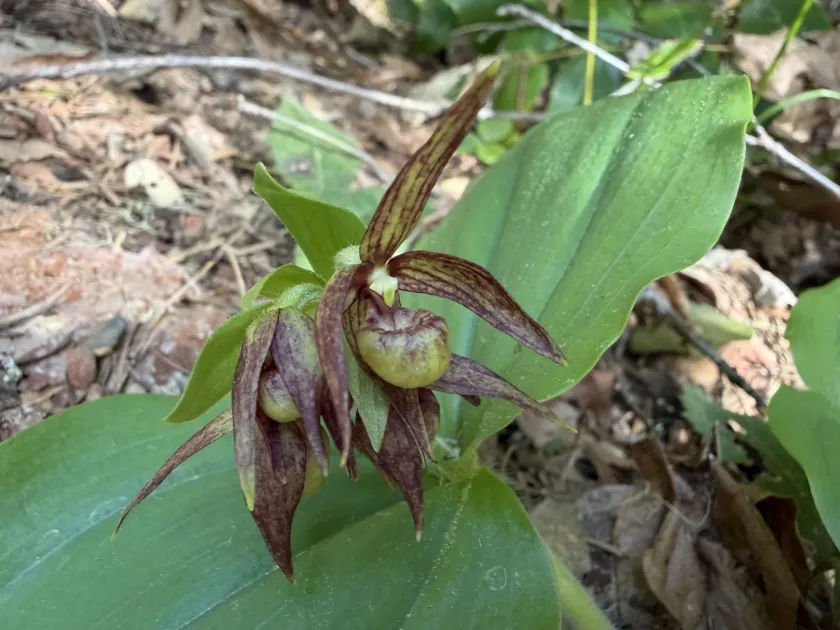
The clustered lady's slipper (Cypripedium fasciculatum) is a perennial herbaceous plant belonging to the Orchidaceae family. It is a rare species primarily found in the coniferous and mixed forests of western North America.
This plant has extremely specific environmental requirements, making it exceptionally difficult to cultivate on an industrial or garden scale. It thrives in areas with moderate humidity, partial shade, and a specific composition of forest litter.
Normal root system development requires a symbiotic relationship with mycorrhizal fungi, without which the seeds of the plant essentially cannot germinate. The soil must be well-drained, rich in organic matter, and have a neutral to slightly acidic pH.
Climatic requirements include a mandatory period of cold dormancy, which limits its cultivation area to temperate latitudes. The plant does not tolerate sharp temperature fluctuations or direct, intense sunlight.
In terms of agricultural practice, this is not a traditional crop. Its cultivation is strictly limited to botanical collections and scientific research programs aimed at restoring populations of rare plant species.
Main diseases and pests
Primary threats to the plant involve the destruction of its natural habitat due to logging and intensive forest management practices. Changes in the hydrological regime of forest ecosystems significantly affect population stability.
Pests that commonly affect the plant include small forest rodents and slugs, which feed on young shoots and vegetative parts. Fungal infections frequently occur in cases of waterlogged soil and poor air circulation.
A decline in pollinator activity also poses a serious threat. In nature, the clustered lady's slipper relies on specific insect species for pollination; the absence of these insects disrupts its natural reproductive cycle.
Due to its high sensitivity to ecological shifts, the species is considered vulnerable. Agricultural errors during introduction attempts, such as overwatering or the use of mineral fertilizers, typically result in the plant's death.
Conservation efforts prioritize the establishment of protected natural areas and the minimization of human impact, as the plant possesses very low adaptive capacity to anthropogenically altered environments.