
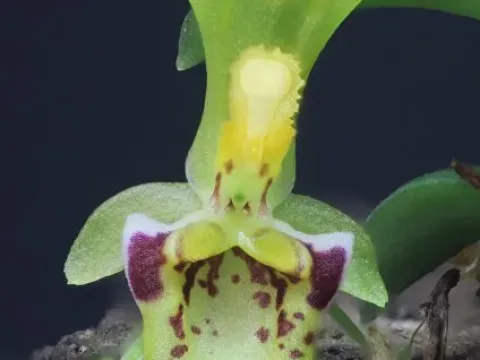
Chytroglossa
Chytroglossa
Chytroglossa is a genus of miniature epiphytic orchids belonging to the Orchidaceae family. This plant is endemic to the tropical forests of Brazil, where it thrives in conditions of high humidity and stable temperatures.
What the section contains

Chytroglossa
Unlike many agricultural crops, Chytroglossa is not a mass-market commodity but belongs to the category of highly specialized ornamental plants. Its botanical structure includes small sympodial pseudobulbs and narrow, leathery leaves arranged in two rows.
The crop requires a specific microclimate: high relative humidity (at least 70%) is a critical condition for its normal metabolism. In home or greenhouse conditions, it is essential to maintain good air circulation to prevent moisture stagnation in the leaf axils.
The plant prefers diffused light without direct sunlight, as its natural habitat is the lower and middle layers of the tropical forest. The soil substrate must be as light and breathable as possible, usually based on coniferous bark, sphagnum moss, and charcoal.
The temperature regime for Chytroglossa should be moderately warm, without sharp daily fluctuations. Ideal indicators are considered to be in the range of +18 to +25 degrees Celsius, while the plant is extremely sensitive to root system hypothermia.
The main threats to this crop are fungal and bacterial infections caused by substrate overwatering or a lack of ventilation. Root rot is the primary problem, leading to rapid loss of decorative quality and the death of the specimen.
Among pests, spider mites and scale insects pose the greatest danger, as they actively reproduce in dry air conditions or when quarantine measures are ignored. Thrips feeding on young plant tissues are also frequently observed.
To combat pests, regular inspections of leaf blades and the use of specialized insecticides and acaricides are recommended. Prevention includes maintaining optimal greenhouse hygiene and monitoring humidity levels.
It is important to monitor the quality of irrigation water: an excess of hardness salts leads to substrate salinization and root burns. It is recommended to use only soft, settled, or rainwater at room temperature.
If signs of rot are detected, sanitary pruning of damaged parts and fungicide treatment should be carried out immediately. Using sterile tools when working with the crop is a mandatory agronomic requirement.