
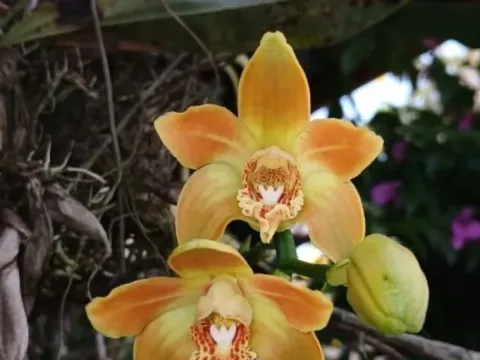
Chysis
Chysis
Chysis is a genus of epiphytic and lithophytic orchids belonging to the Orchidaceae family. In their natural habitat, these plants thrive in the tropical forests of Central and South America, preferring warm and humid conditions at altitudes of up to 1500 meters above sea level.
What the section contains


Chysis
For successful cultivation, these plants require bright but diffused light. Direct sunlight can cause burns on the fleshy pseudobulbs, therefore, shading is recommended during the summer months. The optimal temperature range varies from 20 to 26 degrees Celsius during the day, with a mandatory drop at night.
The potting medium must provide excellent drainage, as the roots of Chysis are sensitive to waterlogging. An ideal substrate is a mixture of pine bark, charcoal, and sphagnum moss, which retains moisture without hindering air circulation to the root system.
During the active growth phase, Chysis requires regular watering, ideally via immersion or thorough soaking. It is crucial to prevent water from accumulating in the leaf axils, which can lead to the development of rot. Ambient humidity should be maintained at a level of 60-80%.
Fertilization is carried out during the vegetative stage using specialized orchid fertilizers with a reduced salt concentration. Once the pseudobulbs have matured, the plant enters a rest period during which watering is significantly reduced and fertilization is stopped entirely until new flower spikes emerge.
The primary threats to the culture include fungal and bacterial infections that develop due to improper temperature control and excessive humidity. Powdery mildew and various forms of rot can severely damage the pseudobulbs and the root system of the plant.
Among pests, spider mites and scale insects are the most common, as they feed on the plant sap and weaken its immune system. To control these, acaricides and broad-spectrum insecticides should be applied according to the manufacturer's instructions.