
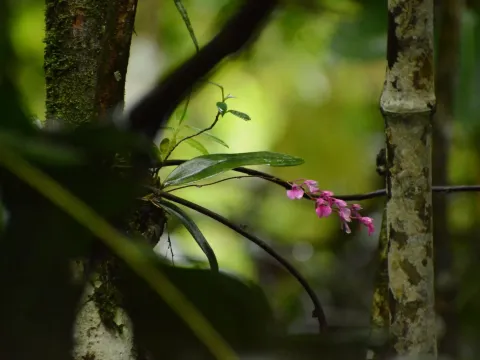
Comparettia
Comparettia
Comparettia is a genus of epiphytic orchids belonging to the Orchidaceae family. These plants are native to the tropical forests of Central and South America, where they grow high on tree branches, thriving in humid, well-ventilated forest environments.
What the section contains


Comparettia
The plant exhibits a sympodial growth habit. It features small, compact pseudobulbs with singular, leathery leaves and produces long, pendulous inflorescences adorned with vibrant flowers, often characterized by a distinctive spur at the base of the labellum.
To cultivate Comparettia successfully, growers must maintain high relative humidity levels, typically between 60% and 80%. Proper air circulation is just as critical as humidity to simulate the natural airflow found in their native tropical canopy habitats.
Since Comparettia is an epiphyte, standard potting soil is entirely unsuitable. Cultivation on mounts (such as tree fern fiber or cork slabs) or in small baskets with a very loose, airy bark mix is necessary to prevent root rot and ensure the roots dry out between waterings.
Light intensity should be high but diffused. These orchids require significant light to bloom, but direct exposure to intense midday sun can easily scorch their delicate foliage. Bright, indirect light from an east-facing window or under greenhouse shade cloth is ideal.
The most significant threat to Comparettia is root rot, almost always caused by waterlogging or a substrate that breaks down too quickly. Maintaining an "air-breathing" root environment is the most important factor in preventing fungal and bacterial rot.
Spider mites are a major pest for Comparettia, particularly when the surrounding air becomes too dry. These tiny pests feed on the leaves, creating a stippled appearance and weakening the plant, eventually leading to reduced vigor and stunted growth.
Scale insects and mealybugs can hide in the leaf axils or near the base of the pseudobulbs. Early detection is vital, as these insects can multiply rapidly in warm, stagnant environments, eventually necessitating the use of systemic insecticides.
Leaf spot fungi can occur if water remains on the leaves for too long after irrigation, especially in cooler, poorly ventilated spaces. Keeping the foliage dry and ensuring fresh air movement is the best preventative measure against these infections.
Good cultural practices, such as quarantining new additions to a collection, using sterile tools, and regularly inspecting the undersides of leaves, constitute the most effective defense against pests and diseases in orchid cultivation.