
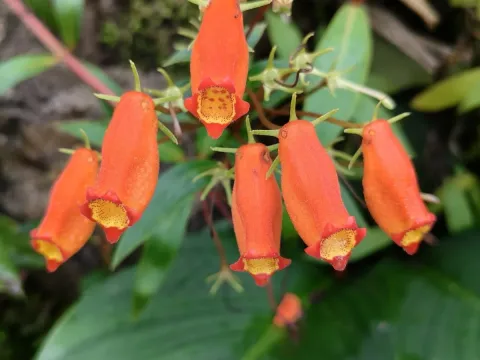
Seemannia
Seemannia Regel
Seemannia is a genus within the Gesneriaceae family known for its elegant foliage and bell-shaped flowers. As an agricultural crop in horticultural settings, it requires precise environmental controls to thrive.
What the section contains
 Seemannia
 nematanthodes x Seemannia sylvatica
Seemannia nematanthodes
Seemannia nematanthodes (Kuntze) K. Schum.
Seemannia
Seemannia nematanthodes x Seemannia sylvatica
Seemannia nematanthodes
Seemannia nematanthodes (Kuntze) K. Schum.
 Seemannia purpurascens
 Rusby
Seemannia purpurascens x Seemannia sylvatica
Seemannia purpurascens x Seemannia sylvatica
Seemannia purpurascens
Seemannia purpurascens Rusby
Seemannia purpurascens x Seemannia sylvatica
Seemannia purpurascens x Seemannia sylvatica
 Seemannia sylvatica
 (Kunth) Hanst.
Seemannia sylvatica
Seemannia sylvatica (Kunth) Hanst.
Seemannia
The plant prefers bright, indirect light conditions. Direct sunlight often leads to leaf scorch and dehydration, significantly reducing the plant's overall health and aesthetic value during the growing season.
Soil requirements involve a lightweight, porous substrate that allows for excellent drainage. A blend of peat moss, perlite, and organic compost is usually the ideal medium for root development in Seemannia.
The optimal temperature for Seemannia ranges between 20°C and 24°C. During the dormant phase, the plants require a cooler environment, often transitioning into a rest period where the above-ground growth may perish.
Humidity management is crucial for this crop. Maintaining ambient humidity levels above 50% helps prevent physiological stress. In agricultural practice, misting or using humidity trays is standard procedure to maintain the desired microclimate.
The primary threats to Seemannia are root rot and fungal infections, typically induced by overwatering. It is essential to ensure that the potting medium remains moist but never saturated.
Spider mites are the most common pests, especially in conditions where air circulation is poor or humidity is too low. Early detection through regular crop scouting is vital for effective management.
Aphids and mealybugs may also infest the plant, drawing nutrients from the stems and young leaves. Using organic soap-based insecticides or targeted biological controls is recommended for sustainable crop management.
To mitigate disease risks, always use sterilized tools when pruning or propagating Seemannia. Keeping the foliage dry during irrigation helps minimize the occurrence of leaf spotting diseases.
Regular sanitation of the growing area is an essential part of the production cycle. Removing dead plant matter helps reduce the inoculum levels of pathogens that can lead to outbreaks of gray mold or other fungal issues.