
Seemannia
Seemannia nematanthodes x Seemannia sylvatica
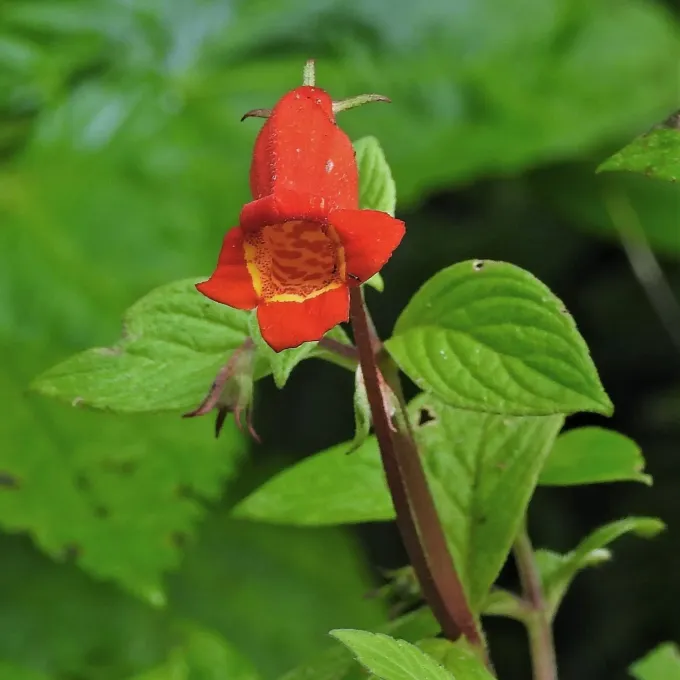
Description
Growing requirements
Seemannia (Seemannia nematanthodes x Seemannia sylvatica) is a striking interspecific hybrid belonging to the Gesneriaceae family. This perennial herbaceous plant, characterized by a distinct dormant period, is highly valued by horticulturists for its compact form and vibrant, bell-shaped flowers.
The native range of the parent species encompasses tropical regions of South America, specifically Bolivia and Argentina. As a cultivated plant, it has adapted well to indoor environments, where it demonstrates a remarkable ability to form dense clusters of lush, leafy stems.
Successful cultivation requires bright, filtered light protected from direct sun exposure. If light levels are insufficient, the plant's stems may become leggy, and flowering will be significantly reduced or ceased, making east or west-facing windows the ideal location.
The growing medium should be lightweight, airy, and possess a slightly acidic pH. An optimal substrate mix consists of peat-based soil combined with perlite or vermiculite to ensure effective drainage and prevent the accumulation of excess moisture in the root system.
During the active growing season, temperatures should be maintained between +20°C and +25°C. It is crucial to avoid sudden temperature fluctuations and cold drafts, as these can adversely affect the health of the plant's delicate leaves and developing flower buds.
Main diseases and pests
The primary threats to Seemannia include pests such as mealybugs and spider mites, which thrive in low-humidity environments. Regular inspection of the undersides of the leaves is essential for the early detection and management of these insect colonies.
In conditions where the soil remains consistently waterlogged, the plant is susceptible to fungal diseases, particularly root rot. To mitigate these risks, watering should only be performed once the top layer of the substrate has dried out completely.
Failure to follow proper horticultural practices can lead to infections like gray mold (Botrytis), which manifests as a distinctive fuzzy grayish coating. Affected plant parts must be removed immediately, followed by the application of specialized fungicides.
Poor ventilation combined with high humidity also promotes the development of various pathogens. It is important to ensure adequate air circulation around the container to prevent the development of stagnant, overly humid microclimates.
Disease prevention strategies include maintaining a quarantine period for new additions to your collection and keeping the growing area clean. Utilizing high-quality, sterile potting media significantly reduces the risk of soil-borne infections.