
Seemannia nematanthodes
Seemannia nematanthodes (Kuntze) K. Schum.
Description
Growing requirements
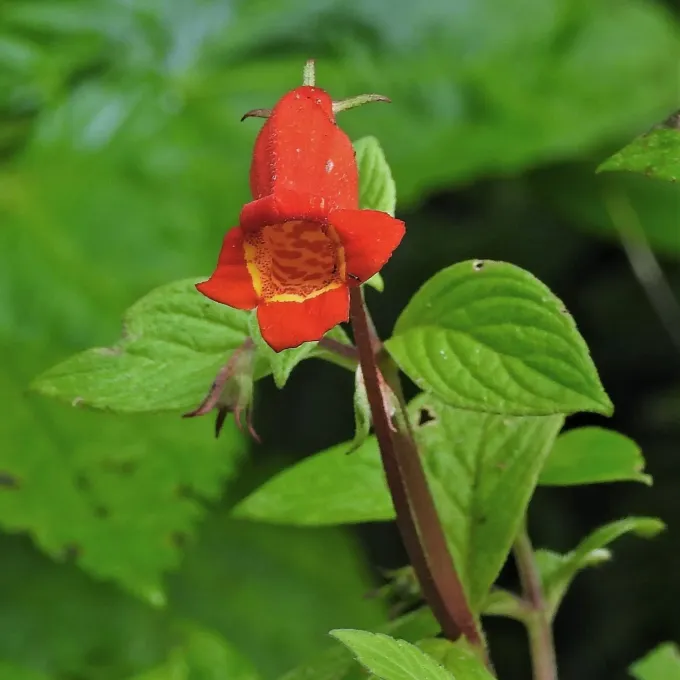
Seemannia nematanthodes is a perennial herbaceous plant belonging to the Gesneriaceae family. Known for its distinct tubular flowers and creeping rhizomatous growth, it is a specialized crop favored in decorative horticulture for its ability to thrive in shaded, humid microclimates.
The plant originates from the tropical and subtropical regions of South America, primarily within the Andean slopes of Argentina and Bolivia. In its native habitat, it grows in protected rock crevices or forest floors where moisture is consistent and ambient temperatures remain moderate throughout the year.
Successful cultivation requires high levels of ambient humidity and bright, indirect light. Direct sunlight can cause chlorosis or leaf scorch, while low light conditions result in etiolation of the stems. Maintaining a consistent temperature range between 20°C and 25°C is essential for peak metabolic activity.
Soil requirements dictate a light, porous, and well-draining medium. A mixture of high-quality peat moss, perlite, and coarse vermiculite is recommended to ensure proper oxygen exchange at the root level, which is vital for the health of the plant's delicate scaly rhizomes.
Fertilization programs should focus on high-phosphorus liquid formulas during the active growth cycle to support floral development. Water quality is also a key agronomical factor; utilizing tepid, soft water prevents mineral buildup and root tip necrosis, which can occur with high-salinity water sources.
Main diseases and pests
Spider mites are the most persistent pest for this species, particularly in drier environments where they colonize the undersides of leaves. Their feeding activities cause stunted growth and yellowing of the foliage, necessitating regular preventative scouting and misting.
Root rot, primarily caused by Pythium and Phytophthora species, remains the most significant threat to the plant's longevity. This is almost exclusively triggered by over-irrigation or inadequate drainage, leading to the rapid decay of the rhizomatous root system.
Fungal leaf spot and Botrytis can emerge in stagnant, damp air conditions. These infections can spread quickly through a planting tray or display area if ventilation is not properly maintained, making hygiene and air circulation critical components of the farm management strategy.
Effective pest management relies on the rotation of systemic insecticides and acaricides to prevent the development of resistant pest populations. Integrated Pest Management (IPM) practices, including the use of biological control agents, are increasingly effective in protected cultivation environments.
Strict sanitation protocols are required when handling the plant, especially during propagation. Sterilizing containers, tools, and substrates reduces the incidence of soil-borne pathogens and ensures a healthy crop cycle throughout the season.