
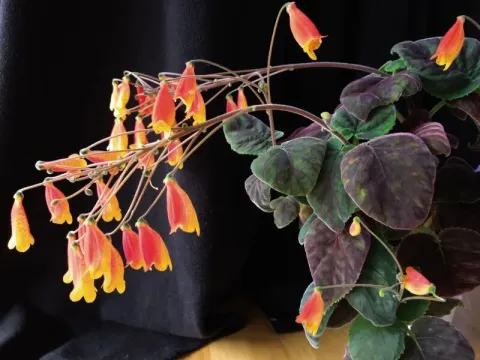
Smithiantha
Smithiantha
Smithiantha is a perennial herbaceous plant belonging to the Gesneriaceae family. Originating from the tropical mountain regions of Mexico, this crop requires specific environmental conditions to thrive, primarily high humidity and stable temperatures.
What the section contains


Smithiantha
The plant prefers bright, diffused light for optimal growth. Direct sunlight should be avoided as it can scorch the delicate, velvety leaves; therefore, placing the plant near east or west-facing windows is recommended.
The ideal temperature for active growth ranges between 20°C and 25°C. Smithiantha is sensitive to sudden drafts and extreme temperature fluctuations, which can trigger dormancy or damage the plant's health.
Soil for cultivation should be loose, nutrient-rich, and slightly acidic. A well-draining potting mix containing peat moss, perlite, and vermiculite is highly effective in maintaining the necessary moisture balance without waterlogging the roots.
Irrigation should be consistent but careful. Water should be applied directly to the soil to avoid wetting the foliage. During the dormant season, when the foliage dies back, water intake should be significantly reduced until new growth emerges from the rhizomes.
Common pests affecting Smithiantha include spider mites and mealybugs. If an infestation occurs, it is essential to use appropriate systemic insecticides or miticides to prevent damage to the leaves and flowers.
Overwatering is a primary cause of concern, often leading to rhizome rot. Proper drainage is critical; the soil should be kept moist but never saturated to prevent the development of anaerobic conditions around the roots.
Fungal infections, such as powdery mildew, can appear if air circulation is poor or if the plant environment remains overly stagnant. Ensuring good airflow around the plants helps to mitigate the risk of fungal outbreaks.
Nutrient deficiencies or improper soil acidity can cause chlorosis or stunted development. Regular fertilizing with a balanced liquid plant food during the growing season is necessary to sustain vigorous blooms.
Routine inspection of the plant base and root system is vital for early detection of issues. Using sterilized soil and maintaining general greenhouse hygiene effectively reduces the likelihood of severe pest or disease pressure.