
Rhipsalidopsis hybrid
Rhipsalidopsis hybrid
Description
Growing requirements
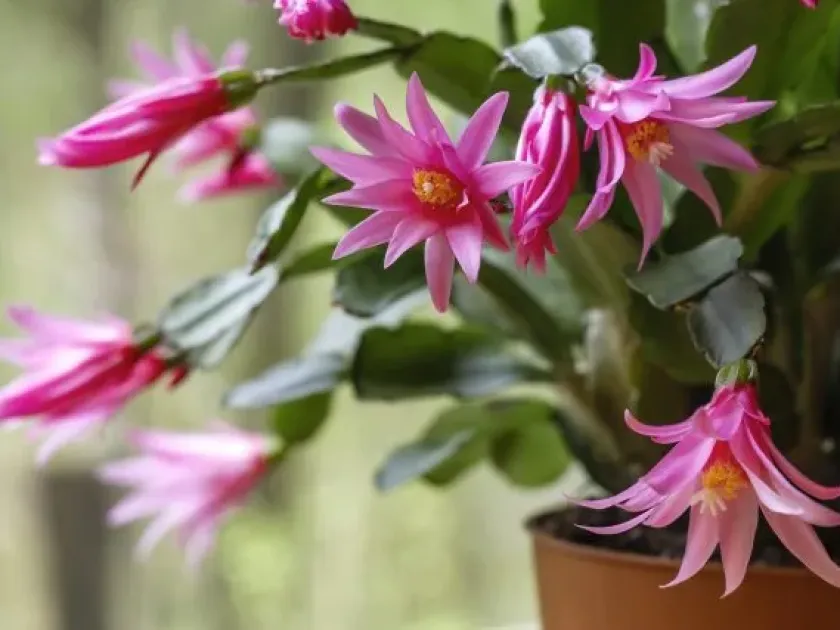
Rhipsalidopsis hybrid is a member of the Cactaceae family, known colloquially as the Easter cactus. These plants are true epiphytes, native to the tropical rainforests of Brazil, where they thrive in the dappled light of the forest canopy.
Botanically, these plants consist of flattened, succulent stem segments that are rounded at the edges. Unlike the Christmas cactus, which produces zygomorphic flowers, Rhipsalidopsis features actinomorphic, star-shaped flowers that bloom in the spring.
To succeed in cultivation, provide bright, indirect sunlight, as harsh direct sun will scorch the delicate segments. Keep the plant in a room with temperatures between 18 and 22 degrees Celsius during the growing season.
The potting medium must be highly porous and well-draining, similar to substrates used for orchids. A mix of peat, pine bark, and perlite provides the necessary aeration that the sensitive roots of the Easter cactus require to prevent suffocation.
Commercially, the Rhipsalidopsis hybrid is cultivated as a popular flowering houseplant. Its trailing habit makes it ideal for hanging baskets, and its seasonal blooming cycle makes it a sought-after item in retail nurseries during the spring months.
Main diseases and pests
Common pests affecting this species include mealybugs and spider mites, which can proliferate if humidity levels are consistently low. Regular misting and physical inspection of the leaf axils are necessary to prevent large-scale infestations.
Root rot, caused by pathogens like Phytophthora, is the primary threat to this plant. It is almost always a result of overwatering or poor drainage; ensuring the soil dries slightly between waterings is essential for long-term health.
Chlorosis and segment drop are signs of nutrient deficiency or water quality issues. Using softened or filtered water is highly recommended, as these plants are sensitive to the high mineral content found in standard tap water.
To ensure robust flower production, the plant must undergo a cool dormancy period. Exposing the plant to cooler temperatures around 12-15 degrees Celsius for several weeks during the winter acts as the natural trigger for spring bud development.
Proper grooming involves removing damaged or diseased segments to maintain air circulation. By following a consistent light and water schedule, growers can ensure that the Rhipsalidopsis hybrid remains vigorous and healthy for many flowering seasons.