
Bulbous air plant
Tillandsia bulbosa
Description
Growing requirements
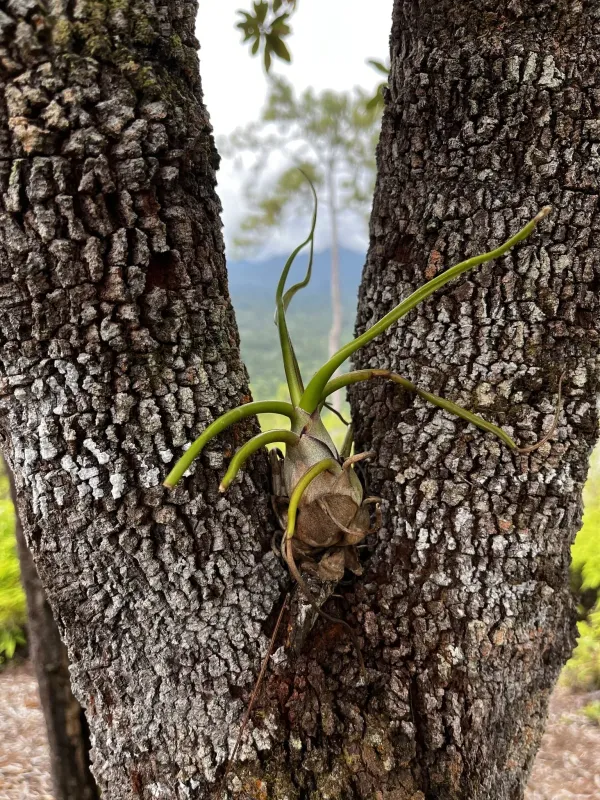
The bulbous air plant (Tillandsia bulbosa) is a fascinating species within the Bromeliad family. It originates from the tropical regions of Central and South America, where it typically grows on trees in humid forests.
Its botanical structure is highly unique: the base of the plant is bulb-like and hollow, which serves as a habitat for ants in the wild. The long, curling leaves are covered in silver scales known as trichomes, which are essential for absorbing moisture and nutrients directly from the air.
To cultivate this plant successfully, one must replicate its natural tropical habitat. It requires bright, indirect sunlight and high levels of humidity, ideally ranging from 60% to 80% to ensure optimal health.
Unlike traditional agricultural crops, Tillandsia bulbosa is an epiphyte and does not require soil. It thrives when mounted on driftwood, bark, or other porous surfaces that allow for good airflow around the roots.
Agricultural management relies on misting the plants with deionized or rainwater. Fertilizer applications should be very dilute and applied via foliage spray during the peak growing season to ensure proper nourishment.
Main diseases and pests
Common pests include mealybugs and spider mites, which thrive if the ambient air is allowed to become too dry for extended periods.
Rot is the most severe threat to this culture, primarily caused by water pooling in the bulbous base, leading to bacterial or fungal infections.
To mitigate these risks, ensure that the plant has adequate ventilation after misting, allowing the foliage to dry completely within a few hours.
If an infestation occurs, specialized horticultural soaps or systemic pesticides suitable for delicate epiphytes should be applied carefully to all leaf surfaces.
Regular monitoring of the leaf base for softening or discoloration is the primary method of early detection for potential disease outbreaks.