
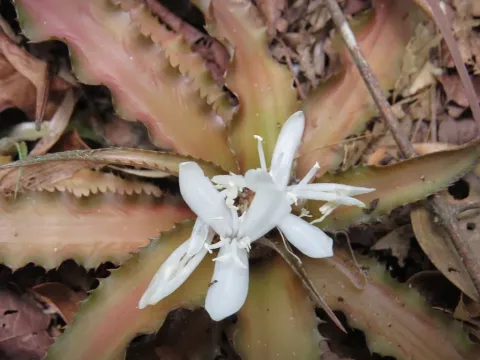
Cryptanthus
Cryptanthus Otto et A. Dietr.
Cryptanthus is a genus of terrestrial herbaceous perennials belonging to the Bromeliad family (Bromeliaceae). Unlike many other bromeliads that are epiphytic, Cryptanthus species are native to the tropical forests of Brazil, where they thrive in the shaded understory of the rainforest floor.
What the section contains


Cryptanthus
Botanically, these plants are known for their distinct star-shaped rosettes, earning them the common name "earth star." The leaves are typically leathery, sometimes ruffled or wavy, and exhibit a wide spectrum of colors ranging from dark green and bronze to vibrant pink and white variegation. The root system is relatively shallow, adapted for soil growth.
The climate requirements for Cryptanthus involve maintaining moderate temperatures between 20°C and 25°C. They thrive in bright, indirect light; too much shade leads to leaf elongation and color loss, while intense, direct sun causes leaf scorch. High relative humidity is preferred, mimicking their native tropical environment.
Regarding soil requirements, the culture demands a porous, acidic, and well-draining medium. An optimal soil mix includes peat moss, perlite, bark chips, and charcoal to provide adequate aeration to the root system. Water quality is crucial, as they are sensitive to high salt concentrations often found in tap water.
The primary economic use of Cryptanthus is in the ornamental plant trade. They are highly sought after by collectors and landscape designers for use in terrariums, vivariums, and as low-maintenance house plants. Their aesthetic versatility makes them a staple for indoor tropical displays.
Common pests affecting Cryptanthus include spider mites, scale insects, and mealybugs. Effective management includes regular inspection of the leaf axils and the use of insecticidal soaps or systemic pesticides when infestations are detected.
Diseases such as root rot and stem rot are the most significant threats to the crop. These conditions are almost exclusively caused by overwatering and poor drainage. To prevent these issues, it is essential to ensure the growing medium dries out slightly between watering cycles.