
Dyckia frigida
Dyckia frigida
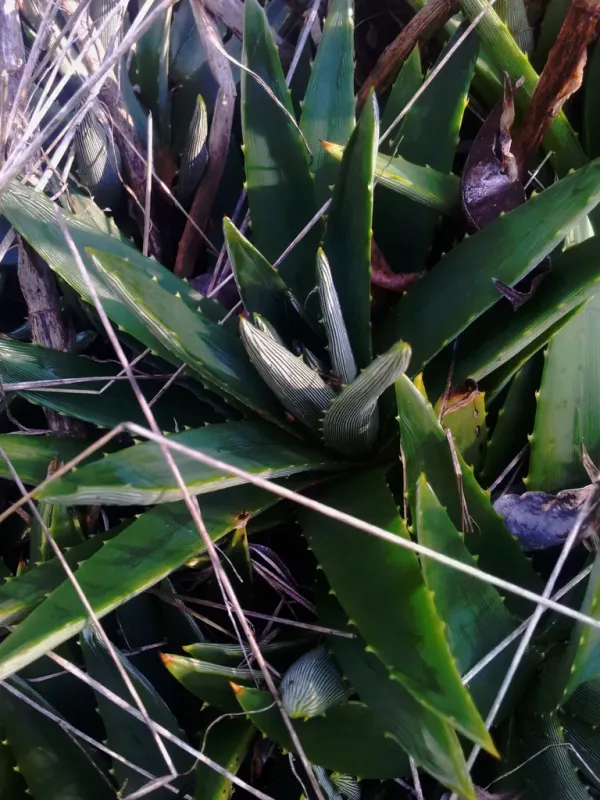
Description
Growing requirements
Dyckia frigida is a succulent perennial belonging to the Bromeliaceae family. Native to the rocky savanna habitats of Brazil, this plant has evolved to thrive in high-sunlight environments where periodic water scarcity is the standard condition for survival.
Botanically, it forms a dense, symmetrical rosette of thick, serrated leaves equipped with sharp marginal spines. This structure is a primary adaptation for succulent storage, allowing the plant to maintain turgidity during prolonged dry spells.
For successful cultivation, Dyckia frigida requires intense, bright light throughout the year. In indoor environments, consistent access to direct sunlight is crucial to maintain the plant's structural integrity, as shade will cause the rosette to lose its compact, attractive form.
The plant demands a highly porous and well-draining substrate to prevent root asphyxiation. A typical potting mix should consist of coarse sand, perlite, and a small portion of organic loam, ensuring a slightly acidic to neutral soil reaction.
Irrigation must be carefully regulated by letting the substrate dry completely between watering sessions. During winter dormancy, the temperature should be kept above 12 degrees Celsius with minimal watering to ensure the plant remains in a healthy, inactive state.
Main diseases and pests
Root rot remains the most significant physiological disorder, usually induced by excessive moisture in the root zone. Ensuring a free-flowing drainage system is the most effective preventative measure against fungal development within the succulent tissues.
Pests such as mealybugs and scale insects represent the most frequent biological threats to the species. These insects often aggregate at the base of the leaves, where their presence may go unnoticed until the plant shows clear signs of decline.
Spider mites can become a nuisance during the heating season when indoor air humidity drops significantly. Regular monitoring and occasional air circulation improvements are essential to deter mite outbreaks in greenhouse or home conditions.
In cases of severe infestation, specialized systemic insecticides can be applied, though one must be cautious not to burn the leaves. Manual removal remains a safe and effective option for early-stage pest management in home collections.
Nutrient management is secondary for this species, as it is adapted to low-fertility soils. Excessive fertilization, especially with nitrogen, can lead to flaccid growth, making the plant more susceptible to opportunistic pathogens and reducing its overall resilience.