
Dyckia brachyphylla
Dyckia brachyphylla
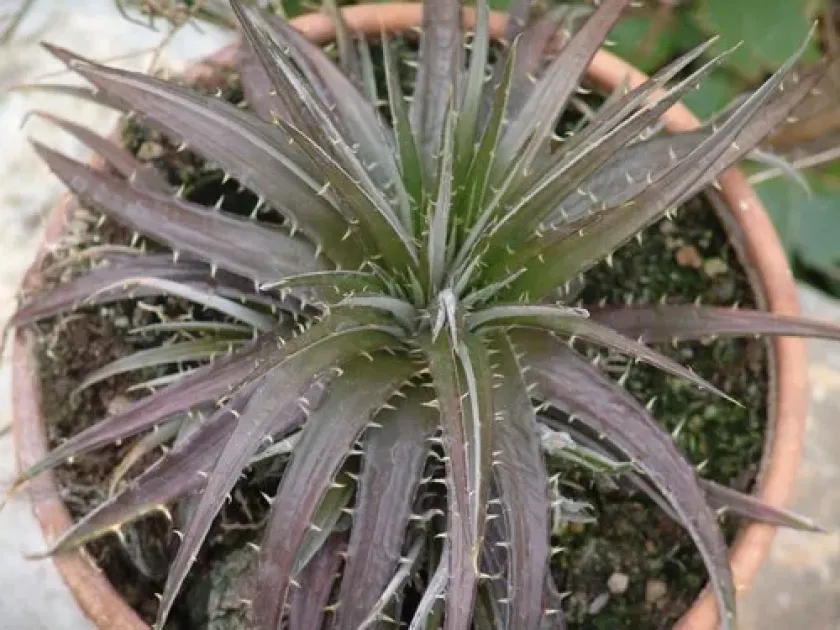
Description
Growing requirements
Dyckia brachyphylla is a member of the Bromeliaceae family, native to the rocky landscapes of Brazil. This plant has evolved as a xerophytic succulent, specifically adapted to thrive in harsh, high-light environments with nutrient-poor, rocky substrates.
Botanically, it is characterized by a dense, basal rosette of stiff, leathery leaves that often feature sharp marginal spines. This anatomy serves to minimize transpiration and protect the plant from local herbivores in its native arid habitats.
Successful cultivation requires high intensity light exposure, ideally receiving several hours of direct morning or afternoon sun. Adequate light is essential for maintaining the characteristic coloration and the compact, architectural rosette form of the plant.
The substrate must be extremely well-draining, mimicking the rocky crevices of its native habitat. A mix of pumice, coarse sand, and a minimal amount of organic matter is recommended to prevent waterlogging, which is a major physiological stressor for this species.
Temperature requirements include warm conditions during the active growing season and a cooler, dry period during the winter rest. It is crucial to maintain minimal moisture levels during the dormant phase to prevent the root system from becoming overly cold and wet.
Main diseases and pests
The most significant threat to Dyckia brachyphylla is the onset of root or crown rot, which is almost invariably caused by excessive irrigation or a potting medium that retains moisture for too long.
Common indoor pests include mealybugs and scale insects, which often congregate in the tight, protective crevices between the stiff, serrated leaves, making manual control difficult without careful monitoring.
Spider mites can become problematic if the surrounding air is kept too dry and stagnant for extended periods, leading to yellowing or speckling of the leaf surface and an overall decline in plant vigor.
Cultural prevention remains the best defense, emphasizing excellent airflow and light management to keep the foliage healthy and resistant to opportunistic pathogens that thrive in damp conditions.
If chemical intervention becomes necessary to combat an infestation, systemic insecticides are generally effective, provided the plant is not kept in a cool environment during the application period to ensure rapid absorption.