
Dyckia brevifolia
Dyckia brevifolia
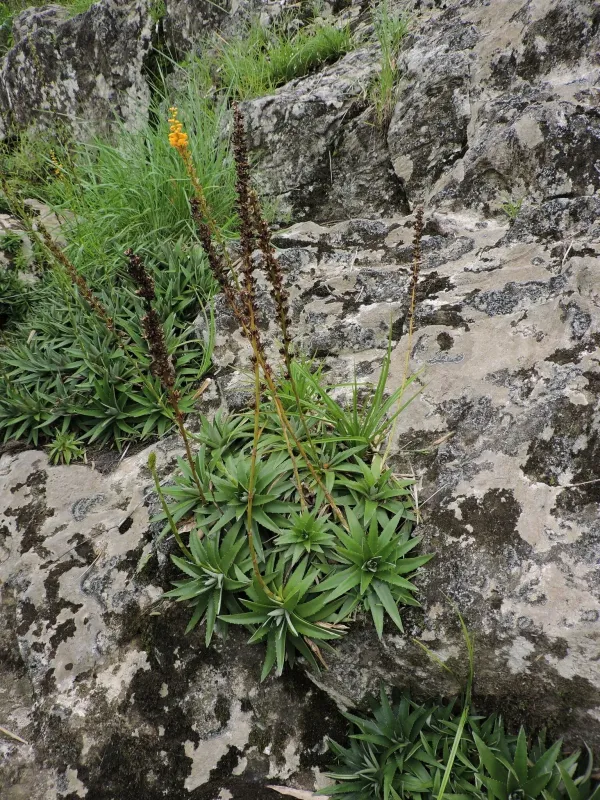
Description
Growing requirements
Dyckia brevifolia is a perennial herbaceous plant belonging to the Bromeliaceae family. Unlike many other bromeliads that are epiphytic, this species is terrestrial, forming dense, rosettes of sharp-edged, rigid leaves that are highly drought-tolerant.
Originating from South America, particularly Brazil, this plant naturally inhabits rocky outcrops. This evolutionary history makes it an excellent choice for xeriscaping and container gardening in areas with high sun exposure and low water availability.
The plant requires full sun to partial shade to maintain its compact, attractive form. Insufficient light leads to etiolation, where the leaves become elongated and fragile, losing their characteristic architectural aesthetic.
Soil composition must be highly porous. A mixture of perlite, coarse sand, and a small portion of peat-based potting soil is ideal. Good drainage is non-negotiable, as the roots are sensitive to stagnant water and anaerobic conditions.
Watering should be deep but infrequent. Allow the substrate to dry out completely between waterings during the growing season. In the winter, reduce watering significantly to simulate the natural dry season of its native habitat, which promotes longevity.
Main diseases and pests
Root rot, caused by overwatering or poor drainage, is the primary threat to Dyckia brevifolia. Once the roots begin to decay, the plant loses its ability to absorb nutrients, leading to rapid deterioration of the rosette.
Pests such as mealybugs and spider mites are common enemies. They often hide deep within the leaf axils or at the base of the rosette, making them difficult to detect until the plant shows signs of stunted growth or chlorosis.
Preventive measures include maintaining low humidity around the foliage and ensuring adequate air circulation. Keeping the center of the rosette dry is critical to preventing fungal crown rot, especially in cooler environments.
If an infestation occurs, manual removal with an alcohol-soaked swab can be effective for localized mealybug patches. For larger infections, applying systemic insecticides is necessary to ensure complete eradication of the pest population.
Regular inspection of the plant's health, focusing on the undersides of the leaves and the crown, is essential. Monitoring these areas allows for early intervention, ensuring that this hardy plant remains in optimal condition for many years.