
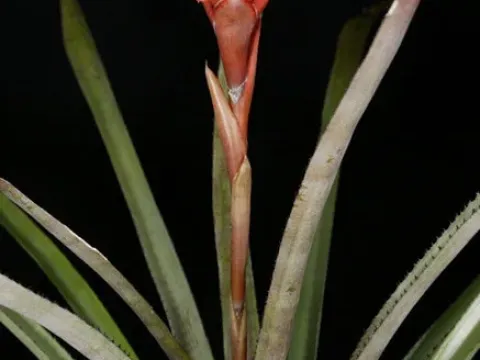
Canistrum
Canistrum
Propagation of Canistrum is primarily achieved through offsets or pups that appear at the base of the parent plant. This is the most efficient and natural method for these bromeliads.
What the section contains

Canistrum
For successful planting, use a well-draining, airy substrate consisting of orchid bark, peat, and perlite. This mimics the natural epiphytic environment of the plant.
Pups should be removed when they reach about one-third of the parent plant's size. A sharp, sterilized knife is necessary to ensure a clean cut without damaging the plant's tissues.
After separation, the young Canistrum should be placed in a warm environment with high humidity to encourage rapid root growth. Avoid direct sunlight during the initial establishment period.
It is important not to over-pot the plant. A small pot is sufficient for its root system, allowing the substrate to dry out slightly between waterings, which is crucial for preventing root rot.
Canistrum thrives in bright, indirect light. While it loves warmth, it should be protected from harsh afternoon sun which can cause leaf scorch and damage the plant's aesthetic value.
The ideal temperature range is between 20 and 26 degrees Celsius. It is sensitive to cold drafts and should be kept away from windows that open during the winter months.
Watering is a key aspect of Canistrum care. The water should be poured into the central tank or rosette, and the substrate should be kept lightly moist but never waterlogged.
High relative humidity is essential for the healthy development of this plant. Regular misting or the use of a pebble tray with water helps to maintain the required moisture levels.
Fertilizing should be done during the growing season using a balanced or low-nitrogen liquid fertilizer diluted to half strength. Apply the fertilizer directly to the soil or by misting the foliage.
Mealybugs are common pests that infest the hidden crevices of the rosette. They can quickly weaken the plant if left unchecked, requiring immediate intervention with insecticidal soaps.
Scale insects present a significant threat to Canistrum. These hard-shelled pests attach themselves to the undersides of leaves and stems, sucking the plant's vital sap.
Root rot is the most common disease encountered due to overwatering or poor drainage. It manifests as yellowing leaves and a softening of the base of the plant.
Fungal infections can develop in the center of the rosette if stagnant water becomes contaminated or if the environment lacks sufficient air circulation.
Effective management involves maintaining a clean growing space and inspecting the plant regularly for early signs of infestation or decay to preserve its long-term health.